Common Defects in Porcelain Disc Insulators
Porcelain insulators can experience cracks, glaze defects, punctures, and cement expansion issues over long-term service.
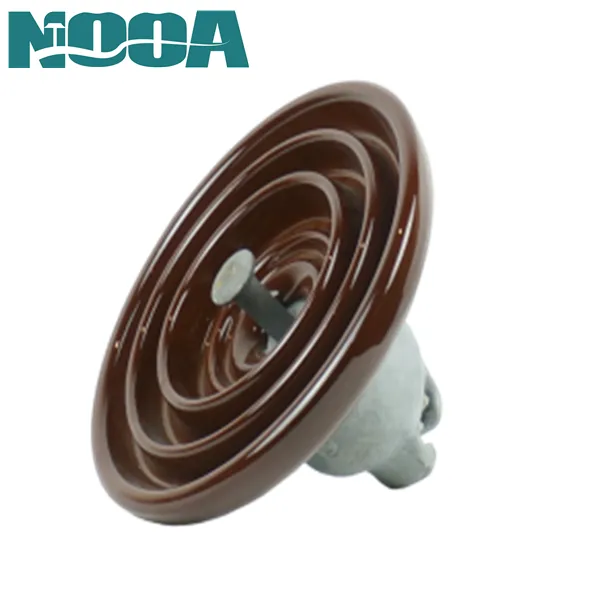
1.Cracking of the Porcelain Body
One of the most common defects is cracking within the ceramic body.
Possible causes include:
Manufacturing defects
Mechanical overload
Transportation damage
Thermal stress
Installation impacts
Even small cracks may reduce dielectric strength and accelerate failure.
2.Porcelain Puncture
Puncture occurs when electrical discharge penetrates through the porcelain body.
Common causes include:
Excessive overvoltage
Internal material defects
Aging insulation
Lightning surges
Unlike glass insulators, punctured porcelain units may remain visually intact, making detection more difficult.
3.Glaze Peeling and Surface Damage
The glaze protects the ceramic surface from moisture and contamination.
Defects include:
Glaze cracking
Surface peeling
Manufacturing imperfections
These issues can increase contamination accumulation and leakage current.
4.Cement Growth and Expansion
Over time, moisture penetration and chemical reactions may cause expansion of the cement layer between the porcelain shell and metal fittings.
Potential consequences include:
Internal stress
Cracking
Mechanical weakening
Common Defects in Glass Disc Insulators
Glass insulators are mainly affected by self-shattering, surface damage, inclusions, and mechanical fitting defects.
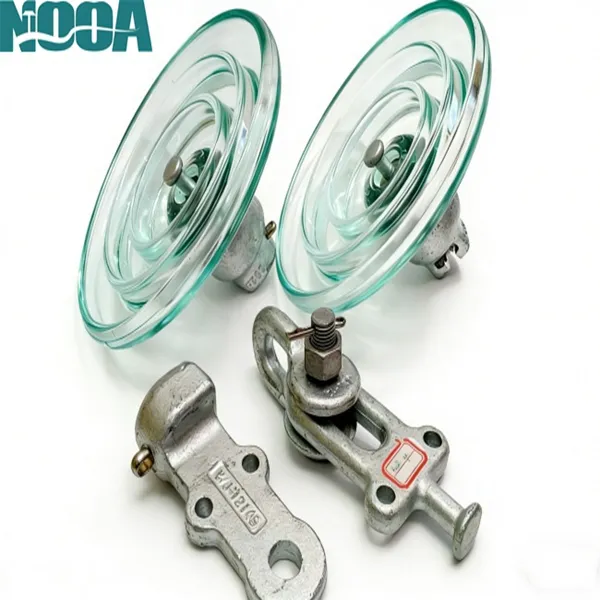
1.Self-Shattering (Self-Explosion)
Self-shattering is a unique characteristic of toughened glass insulators.
Unlike porcelain puncture, damaged glass units break visibly, allowing maintenance personnel to quickly identify failed insulators.
Possible causes include:
Internal stress concentration
Nickel sulfide inclusions
Manufacturing imperfections
Thermal shock
Mechanical impact
Although often perceived as a defect, self-shattering actually improves inspection efficiency.
2.Surface Chipping and Edge Damage
Damage may occur during:
Transportation
Storage
Installation
Maintenance operations
Small chips can become stress concentration points and accelerate future failures.
3.Internal Inclusions
Tiny foreign particles trapped inside the glass during manufacturing can become weak points.
Typical inclusions include:
Nickel sulfide particles
Air bubbles
Unmelted raw materials
Advanced quality control systems significantly reduce these occurrences.
4.Broken Glass Shell
Severe impact from external objects can fracture the glass shell.
Examples include:
Falling tree branches
Flying debris
Construction accidents
Vandalism
Defects Related to Metal Fittings
Corrosion, fitting deformation, and galvanization failures can affect both porcelain and glass insulators.
1.Corrosion of Caps and Pins
Corrosion is particularly common in:
Coastal regions
Industrial zones
High-humidity environments
Poor galvanization quality accelerates deterioration.
2.Zinc Coating Deterioration
Insufficient hot-dip galvanization may lead to:
Rust formation
Reduced fitting lifespan
Increased maintenance requirements
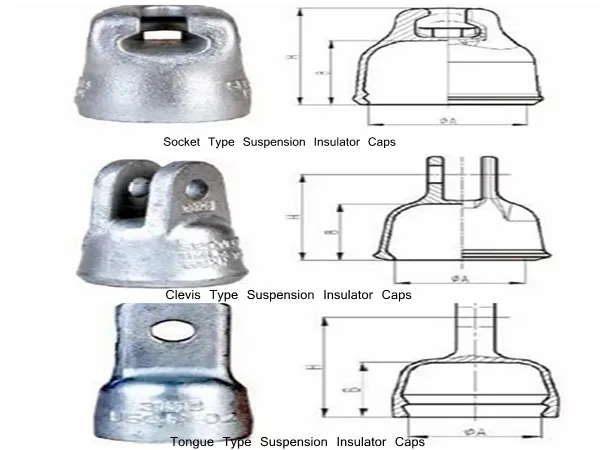
3.Mechanical Deformation
Mechanical overload may deform:
Ball fittings
Socket fittings
Clevis fittings
Tongue fittings
This can compromise string integrity and mechanical safety.
Environmental Causes of Insulator Defects
Pollution, weather conditions, UV exposure, and salt contamination contribute to long-term insulator degradation.
1.Industrial Pollution
Common contaminants include:
Cement dust
Coal ash
Chemical emissions
Metal particles
Heavy contamination increases flashover risk.
2.Coastal Salt Contamination
Salt deposits attract moisture and increase surface conductivity.
This is a major concern for:
Offshore transmission lines
Coastal substations
Island power grids
3.Temperature Cycling
Repeated heating and cooling can generate internal stress over decades of operation.
4.Lightning and Switching Surges
High-energy electrical events may weaken insulation systems and accelerate aging.
Manufacturing Defects and Quality Control Challenges
Poor raw materials, inadequate process control, and insufficient testing can create latent defects.
Common manufacturing-related defects include:
1.Raw Material Impurities
Can lead to:
Weak dielectric performance
Internal stress points
Premature failure
2.Improper Tempering of Glass
Incorrect cooling rates may cause:
Residual stress imbalance
Increased self-shattering risk
3.Incomplete Ceramic Firing
Poor firing control can result in:
Reduced strength
Increased porosity
Lower dielectric performance
4.Assembly Defects
Examples include:
Misaligned fittings
Inadequate cement curing
Poor bonding quality
Inspection Methods for Detecting Insulator Defects
Modern inspection technologies help utilities identify defects before failures occur.
Common inspection methods include:
1.Visual Inspection
Useful for detecting:
Broken glass units
Surface cracks
Corrosion
2.Infrared Thermography
Identifies abnormal heating patterns associated with defective insulators.
UV Corona Detection
Detects electrical discharge activity before flashover occurs.
Drone-Based Inspection
Increasingly used in:
Long-distance transmission lines
Mountainous terrain
Remote utility networks
Glass vs Porcelain Defect Comparison
Both materials have unique failure modes and maintenance considerations.
Defect Type
|
Porcelain Insulator
|
Glass Insulator
|
Visible Failure
|
Often hidden
|
Highly visible
|
Puncture Risk
|
Possible
|
Extremely rare
|
Self-Shattering
|
No
|
Yes
|
Internal Defect Detection
|
Difficult
|
Easier
|
Inspection Efficiency
|
Moderate
|
High
|
Mechanical Reliability
|
Excellent
|
Excellent
|
Long-Term Stability
|
Very good
|
Very good
|
FAQ: Defects and Causes of Porcelain and Glass Disc Insulators for Overhead Lines
1. What are the most common defects found in porcelain disc insulators?
The most common porcelain insulator defects include:
Porcelain body cracking
Puncture failure
Glaze peeling or crazing
Cement growth and expansion
Mechanical damage
Corrosion of metal fittings
These defects can reduce both electrical insulation performance and mechanical reliability.
2. What are the most common defects found in glass disc insulators?
Typical defects in toughened glass insulators include:
Self-shattering (self-explosion)
Edge chipping
Surface impact damage
Internal inclusions
Broken glass shells
Corrosion of caps and pins
Most failed glass insulators can be identified visually due to their characteristic self-shattering behavior.
3. Why do glass insulators self-shatter during service?
Glass insulators may self-shatter due to:
Internal residual stress
Nickel sulfide inclusions
Manufacturing imperfections
Mechanical impact
Thermal shock
This visible failure mode is actually considered an advantage because damaged units can be easily detected during line inspections.
4. What causes porcelain insulator puncture?
Porcelain puncture usually occurs when electrical stress penetrates through the ceramic body.
Common causes include:
Lightning overvoltage
Switching surges
Internal material defects
Long-term aging
Moisture ingress
Unlike glass insulators, punctured porcelain units may remain visually intact.
5. How does pollution affect porcelain and glass insulators?
Pollution deposits such as salt, industrial dust, coal ash, and chemical contaminants increase surface conductivity.
This can result in:
Leakage current
Dry-band arcing
Flashover incidents
Reduced insulation performance
Anti-pollution insulator designs with longer creepage distances are commonly used in contaminated environments.
6. Which insulator type is easier to inspect in the field: porcelain or glass?
Glass disc insulators are generally easier to inspect because failed units become visibly shattered.
Porcelain insulators may develop hidden defects such as punctures or internal cracks that require specialized inspection equipment to detect.
7. Can corrosion of metal fittings cause insulator failure?
Yes. Corrosion of caps, pins, sockets, and other hardware can weaken the mechanical integrity of the insulator string.
Poor galvanization quality, coastal salt exposure, and industrial pollution can accelerate corrosion-related failures.
8. What quality tests help prevent insulator defects before installation?
Manufacturers typically perform:
Mechanical failing load tests
Thermal-mechanical tests
Power frequency withstand tests
Lightning impulse tests
Visual inspections
Galvanization thickness tests
Dimensional verification
Compliance with IEC 60383 and ANSI standards helps ensure product quality and reliability.
1. The critical issue with ceramic insulator string failures lies in the occurrence of zero-value defects. The causes of low or zero values in ceramic insulators include poor quality, multiple lightning overvoltage impacts, and excessive external mechanical stress.
2. Targeted measures to address the low zero-value problem in ceramic insulators include enhancing zero-value detection, implementing diversionary lightning protection measures, and improving the line's lightning resistance level.
3. The spontaneous breakage of glass insulators results from the disruption of the balance between compressive and tensile stresses in the glass component. Common causes of a high spontaneous breakage rate include residual impurity particles within the insulator and excessive external contamination.
4. Spontaneous breakage caused by internal impurity particles is more likely to occur within the first three years of operation and gradually decreases thereafter. The probability of breakage is the same across different positions within the insulator string. If the fragments from the remaining cap are radial, the breakage is likely caused by internal impurities. For breakage caused by severe contamination, the probability is higher at the high-voltage and low-voltage ends of the string compared to the middle, and there is a correlation between breakage occurrences and variations in pollution sources.
5. In extreme cases, spontaneous breakage of glass insulators can also lead to string failures. In regions with high lightning activity, spontaneously broken insulators should be replaced promptly.
6. Corrosion of steel pins and steel caps in DC insulators results from anode corrosion due to electrolytic corrosion, with the wet layer on the surface of the shed plate acting as the electrolyte. Corrosion of the steel cap is concentrated around the edge of the cap, while corrosion of the steel pin is focused where it contacts the cement. Rusting of steel pins and steel caps in AC insulators is generally caused by oxidation after prolonged operation.
7. DC insulator steel pins should be equipped with zinc sleeves, and steel caps should have zinc rings. If the steel pins of AC insulators become corroded, they should be replaced as soon as possible.