Typical Characteristics of Glass Insulators
What Are the Typical Characteristics of Glass Insulators: Zero-Value Self-Breakage
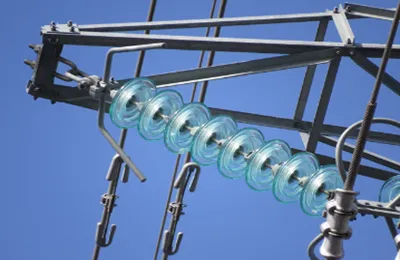
Zero-value self-breakage is a typical characteristic of glass insulators. It refers to the automatic shattering of the glass insulator's skirt when it becomes a zero-value insulator. Maintenance personnel can easily spot self-broken insulators from a distance.
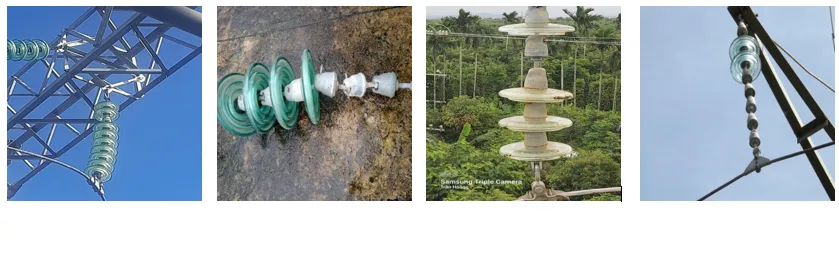
1. Mechanism of Glass Insulator Self-Breakage:
The glass component of a glass insulator is made of tempered glass, characterized by surface compressive stress and internal tensile stress. These stresses result from temperature changes during the manufacturing process. When the glass component is heated to its softening temperature (760–780°C) and then rapidly cooled, the surface layer contracts due to rapid cooling, while the internal temperature remains high and in an expanded state.
This causes the surface layer’s contraction to be constrained, leaving compressive stress on the surface. As the internal temperature drops and the internal layer starts to contract, the hardened surface layer resists this contraction, generating tensile stress inside. These stresses become permanent after complete cooling and the disappearance of the temperature gradient. When the balance between the compressive and tensile stresses in the glass is disrupted, cracks can rapidly develop under stress, leading to the shattering of the glass component, known as self-breakage.
2. Characteristics of Glass Insulator Self-Breakage:
1) Early Exposure and Gradual Decline: Unlike the aging rate of ceramic and composite insulators, glass insulators exhibit "early exposure and gradual decline" in self-breakage rates. Across different production lines used in China's transmission networks, self-breakage typically peaks in the initial 1–3 years of operation and then gradually decreases, stabilizing over time.
2) Analysis of Self-Breakage Locations: The distribution of self-breakage locations in the insulator string was analyzed, ranging from the conductor end to the tower end. Most self-breakage incidents occur at the conductor and tower ends of the string, with fewer in the middle. The distribution of self-breakage along the string generally forms a "saddle shape," which closely aligns with the electric field distribution on the insulator surface.
This indicates that electric field intensity significantly impacts self-breakage.
Higher voltage levels result in stronger electric fields at the same location, increasing the likelihood of self-breakage. To address this, grading rings are installed at the ends of insulator strings to improve the electric field distribution and reduce the deterioration rate of the first insulator.
3) Low Risk of String Failure: For disk-type suspension insulators, string failures mostly occur with ceramic insulators, while glass insulators rarely experience string failure.
In ceramic insulators, defects like micro-cracks in the headpiece can allow moisture ingress during operation, reducing the insulation resistance (resulting in a zero-value insulator). If the insulator string is struck by lightning or experiences flashover for other reasons, most of the discharge energy flows through the headpiece due to its low resistance, causing the ceramic insulator to explode and result in string failure.
In contrast, self-breakage in glass insulators does not cause conductor drop incidents. This is because:
The shattered glass pieces from the skirt or head remain wedged tightly in the iron cap due to the expansion force from self-breakage, retaining sufficient residual strength to keep the string intact and prevent conductor drop. The discharge channel connects directly from the edge of the iron cap to the steel pin shaft, avoiding insulator explosion or conductor drop accidents. However, if moisture enters the head of a glass insulator, significantly reducing its resistance, increased discharge energy through the headpiece can lead to an explosion and potential string failure, particularly if the short-circuit discharge current is high. Therefore, self-broken glass insulators with 'zero-value self-breakage' should be replaced promptly to reduce the risk of string failure.
4) Safety Hazards from Shattered Fragments:
While zero-value self-breakage has many advantages, it also has a drawback: the shattered glass fragments can pose safety hazards, especially in densely populated areas such as cities. For this reason, some power grid companies recommend using ceramic insulators in urban or high-traffic areas.
Wide Application in Transmission and Distribution Systems
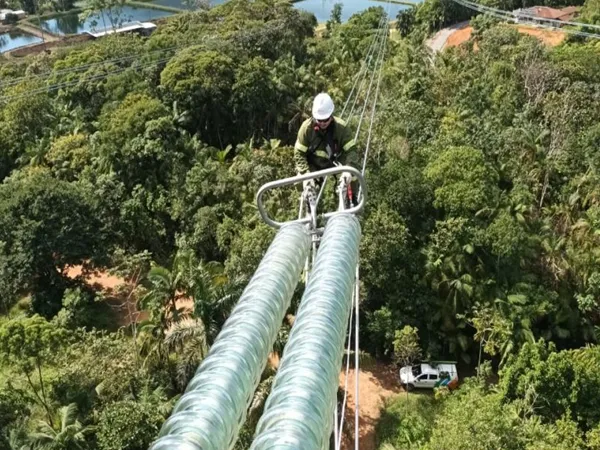
Glass insulators are used across HV transmission lines, substations, railways, and renewable energy projects.
Typical applications include:
High-voltage overhead transmission lines
Extra-high-voltage (EHV) networks
Substation busbar support systems
Railway electrification systems
Renewable energy grid integration projects
Nooa Electric supplies full-range glass insulator solutions for global utility infrastructure development.
Standardized Design and Global Compatibility
Glass insulators follow IEC and ANSI standards, ensuring interchangeability in international projects.
Glass insulators are widely standardized under global frameworks such as:
IEC 60383 series
ANSI C29 series
BS and utility-specific standards
This ensures compatibility across multinational EPC projects and simplifies procurement for global transmission infrastructure.
Nooa Electric manufactures standardized models such as U40B, U70B, U120B, and U210B for international tender requirements.
FAQ – Typical Characteristics of Glass Insulators
1. What are the main characteristics of glass insulators?
They include high dielectric strength, mechanical durability, self-shattering failure behavior, transparency, and long service life.
2. Why are glass insulators used in high-voltage transmission lines?
Because they provide stable insulation performance and reliable mechanical strength under high electrical stress.
3. What is the most unique feature of glass insulators?
Their self-detecting failure behavior, where damaged units break visibly for easy identification.
4. Do glass insulators age over time?
No, glass is an inorganic material and does not suffer from UV or environmental aging like polymer materials.
5. Are glass insulators suitable for polluted environments?
Yes, especially anti-pollution designs with increased creepage distance for coastal and industrial areas.
6. How strong are glass insulators mechanically?
They are available in ratings such as 40kN to 300kN+ depending on transmission line requirements.
7. What standards do glass insulators follow?
Common standards include IEC 60383 and ANSI C29, widely used in international EPC projects.
8. Why are glass insulators easy to inspect?
Because their transparent structure allows visual detection of cracks or damage without tools.
9. Does Nooa Electric supply different types of glass insulators?
Yes, Nooa Electric provides a full range of suspension glass insulators for global transmission and EPC projects.