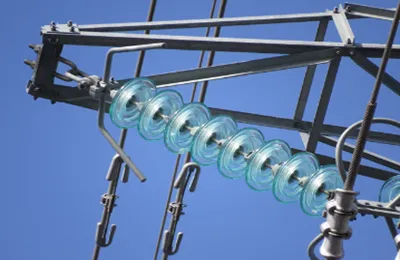
Why Are Power Suspension Insulators Disc Shaped?
Power suspension disc insulator are disc-shaped due to a combination of electrical, mechanical, and environmental design considerations:

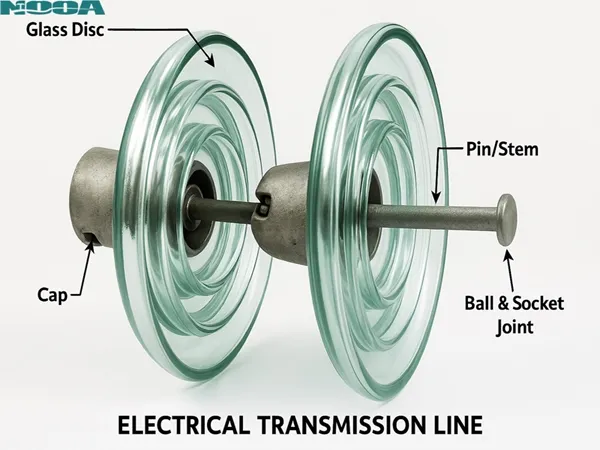
Increased Creepage Distance: The disc shape creates a longer path along the surface (creepage distance), making it harder for electrical current to leak. Multiple discs in a string further extend this path, accommodating higher voltage levels by adding more discs.
1.Water Shedding: The disc's design allows rainwater to drip off the edges, preventing continuous water films that could conduct electricity. This reduces leakage currents and maintains insulation effectiveness.
2.Mechanical Strength: Discs distribute mechanical stress evenly, supporting the weight of power lines while withstanding environmental forces like wind. Their shape and arrangement in strings provide flexibility and durability.
3.Modularity: Discs can be stacked in series, enabling customizable insulation levels for different voltages. This modularity offers cost-effective scalability.
4.Electric Field Distribution: Rounded edges minimize electric field concentration, reducing the risk of corona discharge and associated energy loss or damage.
5.Manufacturing and Contamination Resistance: Discs are easier to mold from glass, with smooth surfaces or ridges that resist contamination buildup. This design also aids in shedding dirt and pollutants.
These factors collectively ensure reliable insulation, structural integrity, and longevity in diverse environmental conditions.
Here are some related Q&As that expand on the topic of power line insulators and their design:
Q1: Why are glass and ceramic commonly used for insulators?
A: Glass and ceramic are non-conductive, weather-resistant, and mechanically robust. They resist surface leakage currents, endure high voltages, and withstand environmental stressors (UV radiation, temperature swings, and pollution). Glass also allows visual inspection for cracks, while ceramic offers superior mechanical strength.
Q2: Why not use a single solid insulator instead of multiple discs?
A: A single solid insulator would require an impractically large size to handle high voltages. Multiple discs in a "string" allow modularity: each disc adds insulation (creepage distance), and the air gaps between them interrupt potential electrical arcs. This design is also lighter and cheaper to manufacture.
Q3: How does voltage relate to the number of discs in a string?
A: Each disc typically handles 10–15 kV, depending on design. For example:
11 kV lines: 1–2 discs.
230 kV lines: 12–15 discs.
Higher voltage lines (e.g., 500 kV) use longer strings (20+ discs) to prevent flashovers.
Why Do Suspension Insulators Have a Disc Shape?
The disc shape maximizes insulation performance while providing strong mechanical support and flexibility for different voltage applications.
When engineers design transmission line insulators, they must solve two major challenges:
Prevent electricity from leaking from the conductor to the tower.
Support heavy mechanical loads from conductors, wind, ice, and tension.
The disc-shaped design successfully addresses both requirements.
Unlike a simple cylindrical or spherical insulator, a disc provides:
Greater leakage path length
Better rainwater shedding
Improved pollution resistance
Efficient material usage
Modular voltage design
This is why disc suspension insulators have become the global standard for transmission networks.
How Does the Disc Shape Improve Electrical Insulation?
The disc profile increases creepage distance and reduces the risk of flashover under contaminated conditions.
Electrical current naturally seeks the shortest path to ground.
The shape of the insulator influences how difficult that path becomes.
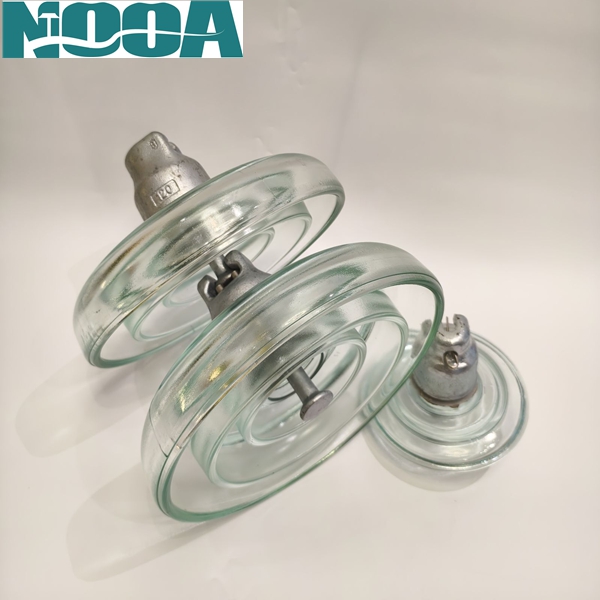
1.Increased Creepage Distance
The underside of each disc creates a longer surface path.
Instead of traveling directly from conductor to tower, leakage current must follow a much longer route.
Benefits include:
Lower leakage current
Better contamination performance
Improved wet-weather insulation
Reduced flashover risk
This is particularly important in:
Coastal environments
Desert regions
Industrial pollution zones
High-humidity climates
2.Better Voltage Distribution
The curved geometry helps distribute electrical stress more evenly across the insulator surface.
Benefits include:
Reduced local electric field concentration
Lower corona discharge risk
Improved insulation reliability
Extended service life
Proper electric field management is especially important for high-voltage transmission projects.
Why Does the Disc Shape Improve Mechanical Strength?
The circular structure distributes mechanical forces uniformly and resists bending stresses effectively.
Transmission insulators experience constant mechanical loading from:
Conductor weight
Wind pressure
Ice accumulation
Line tension
Short-circuit forces
A disc naturally distributes these forces around its circumference.
Advantages include:
Higher structural stability
Better load distribution
Reduced stress concentration
Improved impact resistance
This makes disc insulators ideal for suspension applications.
For example:
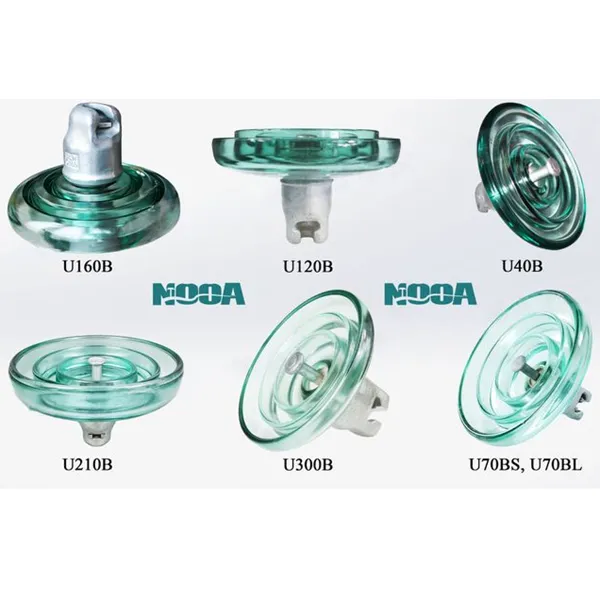
U70BS = 70 kN mechanical strength
U120B = 120 kN mechanical strength
U160B = 160 kN mechanical strength
The same disc principle can be scaled for different load requirements.
How Does the Disc Shape Help During Rain?
The disc profile acts like an umbrella, keeping portions of the insulation surface dry during rain.
One of the biggest threats to insulation performance is water.
The disc shape creates protected zones underneath each unit.
Benefits include:
Dry-band formation reduction
Improved wet flashover performance
Enhanced insulation reliability
Lower outage probability
Even during heavy rain, portions of the creepage path remain relatively dry.
This is a major reason why disc suspension insulators outperform many simpler geometries.
Why Are Multiple Discs Connected Together?
Individual discs allow utilities to easily customize insulation levels for different voltages.
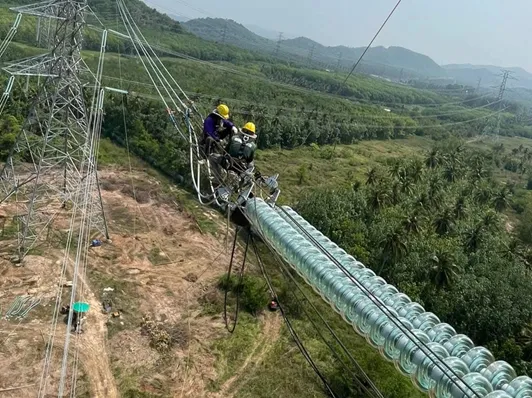
Instead of manufacturing a completely different insulator for every voltage class, utilities can simply add more discs.
Typical examples:
System Voltage :Typical Disc Quantity
33kV : 3–4 Units
66kV : 5–6 Units
132kV : 8–10 Units
220kV : 13–16 Units
400kV : 20–30 Units
This modular approach offers:
Lower manufacturing cost
Simplified inventory management
Easier transportation
Flexible system design
For EPC projects, this standardization significantly reduces procurement complexity.
Design Features of Modern Disc Suspension Insulators
Modern disc insulators incorporate optimized profiles to improve electrical and mechanical performance.
Advanced designs may include:
1.Standard Profile
Suitable for normal environmental conditions.
2.Anti-Fog Profile
Provides increased creepage distance for polluted regions.
3.Aerodynamic Profile
Improves performance in high-wind environments.
4.High-Strength Designs
Used for extra-high-voltage and long-span transmission projects.
Modern manufacturers continuously optimize disc geometry through:
Electric field simulation
Mechanical stress analysis
Pollution testing
Thermal-mechanical testing
FAQ: Why Are Suspension Insulators Disc Shaped?
1. Why are transmission insulators shaped like discs?
Because discs provide longer creepage distance, excellent mechanical strength, and superior weather performance.
2. Why not use a simple cylindrical insulator?
A cylinder would provide less creepage distance and poorer rain-shedding characteristics.
3. Does the disc shape reduce flashover risk?
Yes. The extended leakage path helps reduce surface flashovers.
4. Why are multiple discs connected together?
To achieve different insulation levels for various transmission voltages.
5. Does the disc shape improve pollution performance?
Yes. It increases creepage distance and supports better self-cleaning during rainfall.
6. Are all suspension insulators disc-shaped?
No. Long rod and composite insulators are alternatives, but disc units remain widely used.
7. Why are glass suspension insulators often transparent?
The transparency allows easy visual inspection and helps identify damaged units.
8. What is the main advantage of toughened glass discs?
They provide self-indicating failure, making maintenance more efficient.
9. Do larger discs provide better insulation?
Generally, larger diameters and longer creepage distances improve insulation performance.