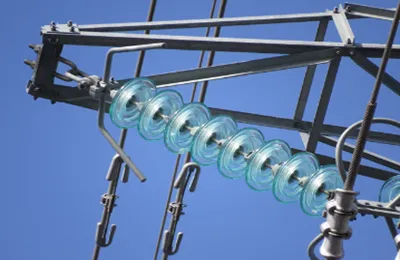
RTV (Room Temperature Vulcanized) coated toughened
glass insulators combine the mechanical strength of tempered glass with a high-performance silicone coating to resist contamination flashover, moisture, and environmental aging. They are widely used on medium-voltage and high-voltage transmission lines, especially in coastal, desert, and industrial-pollution environments.
What Is an RTV Toughened Glass Insulator?
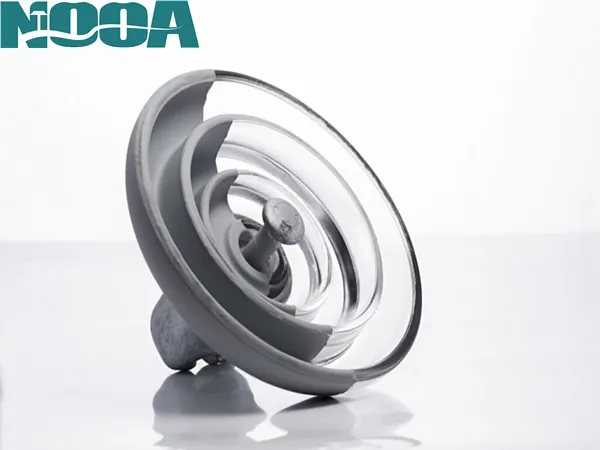
RTV glass insulators are standard toughened glass discs coated with silicone RTV to improve hydrophobicity and pollution performance.
RTV toughened glass insulators are made from high-strength tempered glass but feature a surface layer of RTV silicone rubber. This coating provides a hydrophobic surface that prevents water film formation and improves insulation under polluted or wet conditions. The RTV material cures at room temperature, forming a durable, elastic, waterproof protective layer.
How the RTV Coating Works
The silicone coating creates a water-repellent surface that blocks leakage current and prevents flashover.
The
RTV silicone coating functions through:
Hydrophobicity: Water droplets bead up instead of forming a conductive water film.
Migration Effect: Low-molecular-weight silicone particles migrate to the surface, continuously refreshing hydrophobicity.
Barrier Protection: Reduces contamination adhesion and minimizes dry-band arcing.
Enhanced Insulation Strength: Reduces surface leakage current and flashover risk.
Key Advantages of RTV Toughened Glass Insulators
They resist pollution, improve safety, extend service life, and reduce washing/maintenance needs.
Main performance benefits include:
Superior Pollution Flashover Resistance
Excellent Hydrophobicity & Self-Healing Effect
High Transparency with Zero Hidden Defects
Long-term UV, humidity, and chemical resistance
Reduced Maintenance and Washing Frequency
High mechanical tensile strength from toughened glass
Extended lifespan in harsh outdoor environments
Application Scenarios
Best for polluted, coastal, desert, and high-moisture regions where standard insulators underperform.
RTV coated glass insulators are suited for:
Industrial pollution zones (cement, chemical, mining)
Coastal salt-fog areas
Desert regions with sand, dust, and wind erosion
Wet climates with long rainy seasons
Transmission line corridors difficult to wash
High/extra-high voltage lines: 33kV–500kV+
Manufacturing & Coating Process
The process ensures high adhesion, uniform thickness, and strong outdoor durability.
Typical steps:
Surface cleaning & roughening for better adhesion
RTV silicone coating application (spraying or brushing)
Room temperature curing to form a uniform elastic film
Thickness & adhesion inspection
Electrical performance testing before shipment
Mechanical & Electrical Performance
Mechanical strength from toughened glass + improved electrical insulation from RTV.
Performance highlights:
Mechanical strength typically 40kN–550kN
Excellent puncture resistance
Stable insulation performance under wet and polluted conditions
Longer creepage distance effect due to hydrophobic coating
Stable performance under thermal cycling, UV exposure, and humidity
Installation & Maintenance Considerations
Install like normal glass insulators but protect the RTV coating from hard impact and solvents.
Installation Tips:
Avoid scratching or cutting the RTV surface
Do not use aggressive chemical cleaners
Handle with soft tools or gloves
Ensure metal fittings are clean before assembly
Maintenance Notes:
RTV coating reduces washing frequency
Hydrophobicity gradually recovers even after pollution exposure
Visual inspection is usually enough—major cleaning seldom needed
Comparison: Standard Glass vs. RTV-Coated Glass Insulators
RTV versions offer far better pollution resistance with low extra cost.
Feature
|
Standard Toughened Glass
|
RTV Toughened Glass
|
Hydrophobicity
|
Low
|
Very high
|
Pollution flashover
|
Higher risk
|
Strong resistance
|
Contamination adhesion
|
More
|
Less
|
Maintenance washing
|
Frequent
|
Reduced
|
Recommended areas
|
Normal environments
|
Harsh/polluted environments
|
Key Standards & Testing
Tested according to
IEC, ANSI, and pollution performance standards.
Common standards:
IEC 60383 – Insulator definitions & tests
IEC 60507 – Artificial pollution tests
IEC 60815 – Selection for polluted conditions
IEC 61109 – Composite insulator comparison reference
Salt-fog, hydrophobicity, thermal cycling, UV aging tests
Frequently Asked Questions (FAQ)
Quick answers to common buyer and engineer questions.
1. How long does the RTV coating last?
Typically 8–15 years, depending on environment and coating quality.
2. Does the hydrophobic effect wear off?
Yes, temporarily. But RTV silicone has a self-recovering hydrophobicity effect, restoring performance after some time.
3. Is RTV coating necessary for all regions?
Not always. It is recommended for polluted, coastal, desert, and high-moisture areas.
4. How thick is the RTV layer?
Usually 0.2–0.5 mm, depending on product specification.
5. Does the coating affect mechanical strength?
No. Mechanical strength comes from the toughened glass disc; RTV only improves surface insulation.
6. Are RTV insulators more expensive?
Yes, but the cost is offset by reduced maintenance and extended service life.
7. Can RTV glass insulators replace
composite insulators?
In many harsh conditions, yes. They offer better visibility of defects and lower long-term cost.
8. Can the RTV layer be recoated after aging?
Yes. Field recoating is possible following standard RTV restoration procedures.