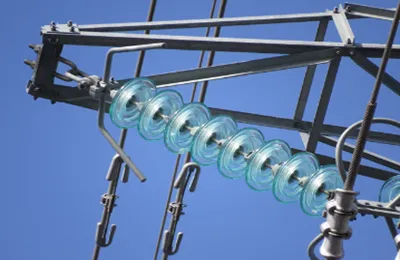
Burst (or shattered) glass insulators are a known and intentionally safe failure mode of
toughened glass insulators. Identifying them quickly in the field is essential to maintain mechanical integrity, electrical safety, and uninterrupted line operation.
1. What Is a Burst Glass Insulator?
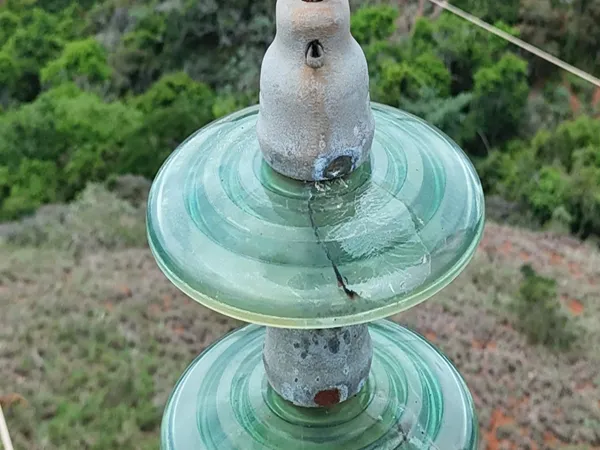
A burst glass insulator is a toughened glass insulator whose glass shell has shattered into small fragments due to internal stress release, impact, electrical fault, or aging.
Key point:
-
The cap-and-pin remains intact
-
Residual mechanical strength is still retained
-
The defect is visually obvious
This self-shattering behavior is a safety advantage of glass insulators compared with porcelain.
2. Why Glass Insulators Burst on Transmission Lines
Understanding causes helps inspectors focus on high-risk locations.
Common reasons include:
-
Manufacturing micro-defects (very rare in modern production)
-
Long-term mechanical stress and fatigue
-
Lightning strikes or switching overvoltage
-
External impact (stones, gunshots, falling objects)
-
Extreme temperature differences
-
Pollution-induced electrical stress
Reputable manufacturers such as Nooa Electric strictly control heat treatment and residual stress to minimize premature bursting.
3. Visual Inspection – The Most Direct Method
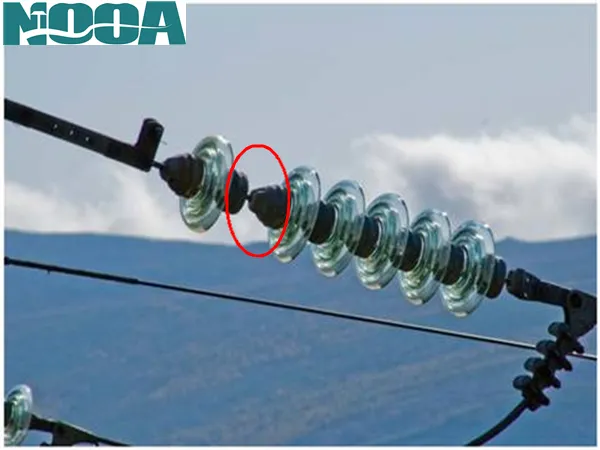
Primary and most reliable method
What to Look For:
-
Missing glass shell
-
Frosted or shattered glass appearance
-
Only metal cap and pin visible
-
Small glass fragments remaining around the pin
Advantages:
Limitations:
Burst glass insulators are much easier to identify visually than cracked porcelain insulators.
4. Ground-Based Inspection with Binoculars
Best for routine line patrols
Inspectors use:
Recommended practice:
-
Inspect strings at angles, not only head-on
-
Focus on tension strings and wind-exposed sections
-
Check after storms or lightning events
This method is widely used by utilities because burst glass insulators are visually distinctive.
Drone (UAV) Inspection – Modern and Efficient
Highly recommended for long-distance transmission lines
Using drones equipped with:
Benefits:
-
Access to difficult terrain
-
Clear close-up images
-
Reduced manpower and safety risks
-
Digital records for asset management
Burst glass insulators show:
-
Clear absence of glass disc
-
Irregular reflective patterns
-
Visible metal fittings without glass cover
6. Helicopter or Aerial Patrol (EHV Lines)
Used mainly for 220kV–1000kV lines
Advantages:
Disadvantages:
-
High cost
-
Weather-dependent
Still, burst glass insulators are among the easiest defects to spot from the air due to their strong visual contrast.
7. Night Inspection (Less Common)
Occasionally used when:
Signs may include:
This is typically supplementary, not primary.
8. What To Do After Finding a Burst Glass Insulator
Important clarification:
-
Immediate replacement is not always required
-
Glass insulators retain residual mechanical strength
-
Electrical insulation is reduced, but string integrity remains
Typical utility practice:
-
Record and mark the location
-
Replace during scheduled maintenance
-
Prioritize tension strings and critical crossings
Standards often allow limited numbers of burst discs per string, depending on voltage level and safety margin.
9. Best Practices to Reduce Risk
-
Use high-quality toughened glass insulators with proven residual strength
-
Implement regular drone or binocular inspections
-
Focus on high-stress sections (angles, dead-ends, long spans)
-
Keep inspection records and trend analysis
Nooa Electric designs glass insulators with high residual mechanical strength, ensuring safe operation even after bursting until replacement.
FAQ – Finding Burst Glass Insulators on Transmission Lines
Q1: Can a burst glass insulator still hold the conductor?
Yes. The metal cap and pin remain intact, maintaining mechanical strength.
Q2: Is a burst glass insulator dangerous?
It is not an immediate mechanical danger, but should be replaced in planned maintenance.
Q3: Can burst glass insulators cause line trips?
Rarely alone, but multiple burst discs combined with pollution or wet conditions may increase flashover risk.
Q4: Why don’t porcelain insulators burst visibly?
Porcelain usually cracks internally, making defects harder to detect.