How Does Pollution Affect the Required Creepage Distance of Electrical Insulators?
Date:2026-08-12Tags:High Voltage Glass Insulator,glass suspension insulators,glass power pole insulators
High Voltage Glass Insulators: Pollution & Creepage Distance
Pollution directly affects the required creepage distance of an electrical insulator because contamination deposited on the insulator surface can become conductive when wet, increasing leakage current and the risk of dry-band arcing and pollution flashover. Therefore, a transmission or substation project installed in a heavily polluted environment generally requires a higher specific creepage distance than the same voltage application in a clean environment.
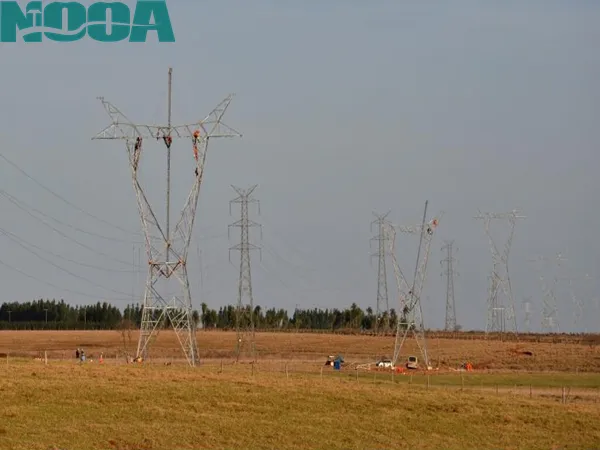
For international tenders and EPC projects, the required creepage distance should not be selected simply by multiplying system voltage by a standard number. It should be determined from the site pollution severity (SPS), system voltage, insulation coordination requirements, environmental conditions, insulator profile, and applicable standards such as IEC.
In procurement, the buyer should therefore specify not only the nominal voltage and mechanical strength of the insulator, but also the required creepage distance, pollution level, applicable design standard, and verification requirements.
What Is Creepage Distance and Why Does Pollution Matter?
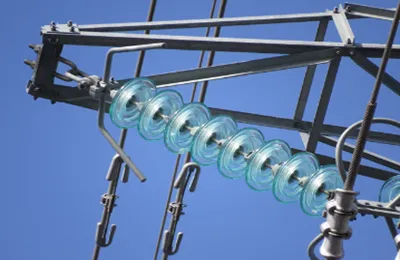
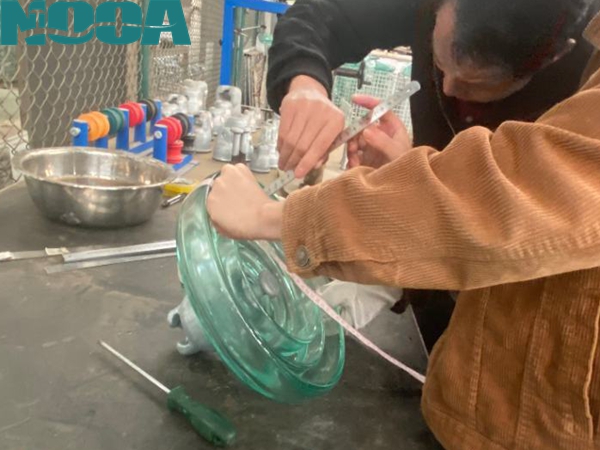
Creepage distance is the shortest distance measured along the insulating surface between two conductive fittings. Pollution can form a conductive layer over this surface, so a longer creepage path helps increase the withstand capability against surface leakage current and pollution flashover.
For a suspension insulator, the electrical insulation between the energized conductor and the grounded tower is not determined only by the physical length of the insulator string. The surface distance along the insulator, known as creepage distance, is particularly important under polluted and humid conditions.
Under clean and dry conditions, the insulating surface has relatively high resistance. However, dust, salt, industrial deposits, cement particles, agricultural contamination, and other pollutants can accumulate on the surface.
When moisture such as rain, fog, dew, or condensation reaches the contaminated surface, the pollution layer can become partially conductive.
This creates a leakage-current path across the insulator surface.
As the leakage current increases, localized dry bands may form. Electrical stress can then concentrate around these dry bands, resulting in dry-band arcing. If the arc develops sufficiently, it may bridge the insulator and cause a pollution flashover.
This is why the required creepage distance for a high-voltage insulator cannot be determined from voltage alone.
For an international transmission-line project, the designer should consider at least:
1. System voltage
2. Highest system voltage
3. Site pollution severity
4. Specific creepage distance requirement
5. Insulator material
6. Insulator profile
7. Altitude
8. Rainfall and humidity
9. Coastal or industrial contamination
10. Insulator orientation
11. Required pollution withstand performance
12. Applicable IEC or national standards
How Does Pollution Increase the Required Creepage Distance?
As pollution severity increases, the required specific creepage distance generally increases, meaning the insulator must provide more surface leakage path per unit of electrical stress.
The relationship can be expressed conceptually as:
Required creepage distance = specific creepage distance × reference voltage
The critical parameter is therefore the specific creepage distance, normally expressed in mm/kV.
A clean environment may require a relatively low specific creepage distance, while a heavily polluted environment requires a higher value.
What Is Site Pollution Severity?
Site pollution severity describes the level of environmental contamination that an insulator is expected to experience at its installation location and is one of the key inputs for determining creepage requirements.
Pollution is not simply measured by how much visible dust exists around a transmission line.
The important issue is how the contamination affects the electrical behavior of the insulator surface when it becomes wet.
Typical sources of pollution include:
Coastal salt pollution
Transmission lines located near coastlines may be exposed to airborne salt particles.
Salt contamination can be particularly problematic because soluble salts significantly increase surface conductivity when moisture is present.
Industrial pollution
Factories, power plants, chemical facilities, cement plants, steel plants, and other industrial installations can generate conductive or semi-conductive deposits.
Agricultural pollution
Agricultural areas can expose insulators to dust, fertilizer particles, soil, and other contaminants.
Desert pollution
Desert environments may have relatively low rainfall but significant dust and sand contamination. The combination of accumulated deposits and occasional moisture can create challenging conditions.
Road and construction pollution
Transmission lines near highways, construction sites, and urban development can accumulate dust and particulate matter.
For an EPC project, the environmental assessment should therefore consider the actual installation location, rather than assuming that all projects within the same country have identical pollution conditions.
How Is Specific Creepage Distance Used in Insulator Design?
Specific creepage distance allows engineers to convert the electrical voltage and pollution severity into a practical surface-distance requirement for the insulator.
Specific creepage distance is commonly expressed as: mm/kV
A simplified design relationship is:
Creepage distance ≈ specific creepage distance × applicable voltage
However, purchasers should be careful about which voltage is used in the calculation.
For engineering and tender documents, the applicable standard should define the reference voltage and calculation method. In IEC-based insulation coordination, designers should not automatically use nominal line-to-line voltage without checking the applicable definition.
Why Does a Longer Creepage Distance Improve Pollution Performance?
A longer creepage path increases the distance that leakage current and surface discharges must travel across the contaminated surface, making it more difficult for an arc to bridge the insulator.
When contamination becomes wet, the surface resistance of an insulator decreases.
Current begins to flow along the surface.
The process can be simplified as:
Pollution deposit → moisture absorption → increased surface conductivity → leakage current → dry bands → dry-band arcing → possible flashover
Increasing creepage distance provides a longer surface path.
However, simply increasing the physical length of the insulator is not always the most efficient solution.
The profile geometry is also important.
We Nooa Electric - Insulator manufacturers always use features such as:
1.Deep sheds
2.Alternating shed diameters
3.Undershed surfaces
4.Longer creepage paths
5.Improved shed spacing
6.Aerodynamic profiles
7.Open-profile designs
8.Fog-type profiles
These features can help reduce the accumulation of contaminants and improve the effectiveness of the available creepage distance.
Therefore, when evaluating two insulators with similar creepage distances, an EPC purchaser should not assume that they will necessarily provide identical pollution performance.
Is More Creepage Distance Always Better?
No. Increasing creepage distance can improve pollution withstand capability, but simply maximizing creepage distance is not always the most economical or technically optimal solution.
A common procurement mistake is to assume:
More creepage = better insulator.
The relationship is more complicated.
An excessively long creepage distance may increase:
1.Insulator string length
2.Tower dimensions
3.Hardware requirements
4.Transportation volume
5.Installation complexity
6.Project cost
7.Wind loading
8.String weight
At the same time, a very complicated shed profile may create additional areas where contamination accumulates.
Therefore, the objective should be to achieve the required pollution performance with an optimized insulator design, rather than simply maximizing surface distance.
For EPC contractors, this is particularly important because insulation selection affects not only the insulator purchase price but also the overall transmission-line design.
How Does Insulator Profile Affect Creepage Distance?
Insulator profile determines how effectively the available creepage distance is used under real environmental conditions, especially when pollution, rain, fog, and moisture are present.
2 insulators can have similar nominal creepage distances but different contamination behavior because of differences in their shed geometry.
For example, an insulator designed for severe pollution may incorporate deeper sheds and a geometry intended to:
1.Reduce direct contamination accumulation.
2.Improve natural washing during rainfall.
3.Prevent continuous water paths from forming.
4.Increase the effective surface leakage path.
5.Reduce the probability of pollution flashover.
For international projects, buyers should therefore evaluate creepage distance together with insulator profile, rather than treating creepage as an isolated specification.
This is especially relevant when comparing:
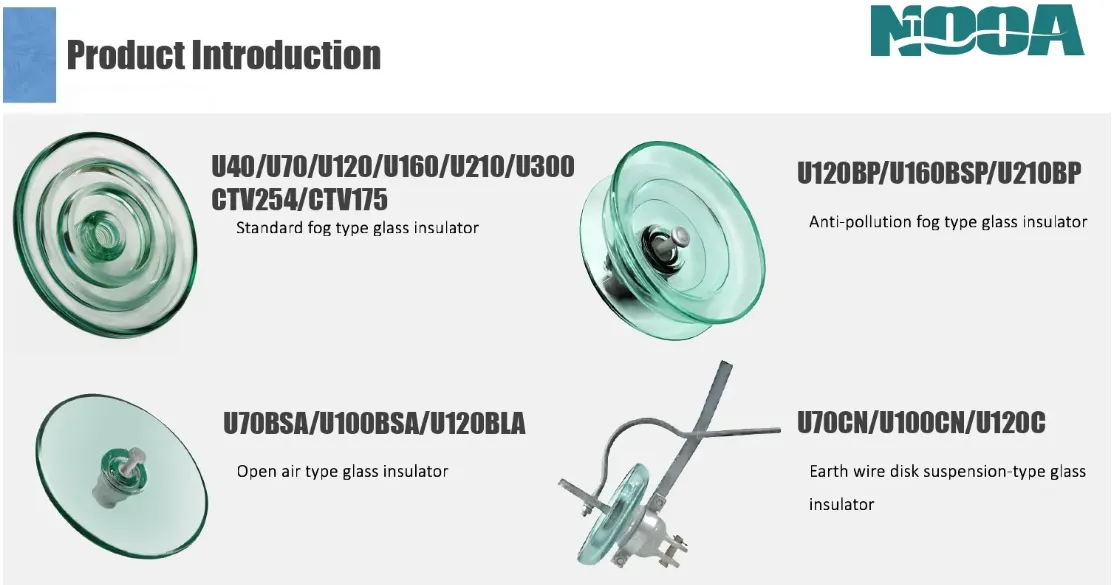
1.Standard glass disc insulators
2.Anti-pollution glass insulators
3.Fog-type glass insulators
4.Open-profile insulators
5.Long-creepage suspension insulators
6.RTV-coated insulators
What Is the Relationship Between Pollution Severity and IEC 60815?
IEC 60815 provides an important framework for selecting and dimensioning outdoor insulation according to environmental pollution conditions, including the use of site pollution severity and specific creepage distance concepts.
For international EPC projects, IEC 60815 is one of the key references for outdoor insulation selection in polluted environments.
The standard provides guidance for determining the suitability of insulation according to environmental conditions rather than relying only on voltage classification.
The pollution environment is generally classified according to different severity levels, from relatively light contamination to very severe contamination.
In practical procurement, the important point is:
Higher site pollution severity → higher insulation pollution withstand requirement → generally higher required specific creepage distance.
The final design may also need to consider:
1.Equivalent salt deposit density
2.Non-soluble deposit density
3.Pollution type
4.Rainfall
5.Wind
6.Humidity
7.Altitude
8.Insulator profile
9.Hydrophobicity
10.Aging
11.Washing conditions
How Does Industrial Pollution Affect Creepage Distance?
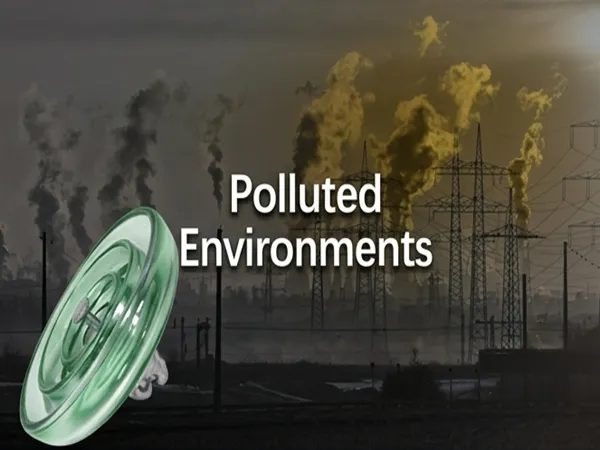
Industrial contamination can require increased creepage distance because chemical and conductive deposits may accumulate on insulator surfaces and become highly conductive when wet.
Industrial pollution can be more complicated than salt contamination because the chemical composition of the deposits varies significantly.
Examples include environments surrounding:
1.Steel plants
2.Cement plants
3.Chemical plants
4.Mining facilities
5.Oil and gas facilities
6.Thermal power plants
7.Heavy manufacturing zones
Industrial contamination may contain particles that are difficult to remove naturally.
This can make the insulator surface more vulnerable to leakage-current development during humid or wet conditions.
For EPC projects close to industrial facilities, it is therefore advisable to avoid selecting an insulator solely based on the country's general environmental classification. The actual project site should be evaluated.
How Does Coastal Pollution Affect Creepage Distance Requirements?
Coastal environments often require greater creepage distances because salt deposits can significantly increase the surface conductivity of outdoor insulators when exposed to moisture.
Salt contamination is one of the classic causes of pollution flashover.
An insulator installed close to the sea may continuously accumulate airborne salt particles.
During dry weather, the contamination may not create an immediate flashover risk.
However, when fog, dew, drizzle, or humidity wets the salt deposit, the contamination layer becomes conductive.
The resulting leakage current can become substantial.
For coastal transmission projects, EPC engineers should therefore consider:
1.Distance from the coastline
2.Wind direction
3.Sea spray
4.Local humidity
5.Fog frequency
6.Rainfall
7.Terrain
8.Seasonal variation
9.Actual contamination measurements
A generic statement such as "the project is near the sea" is not sufficient for final insulation selection.
Where possible, historical contamination data or site measurements should be incorporated into the insulation design.
Does Rain Automatically Solve Pollution Problems?
No. Rain can clean an insulator surface, but light rain, drizzle, fog, or uneven wetting can sometimes increase the risk of pollution flashover instead of immediately removing contamination.
Heavy rainfall can provide a natural washing effect. However, not all rainfall has the same cleaning capability.
Light rain may wet the contamination without removing it effectively.
Fog and dew can be even more important because they can increase surface conductivity without providing significant washing.
This creates an important distinction between:
Wetting pollution and washing pollution away.
For this reason, an insulator designed for polluted environments should not be evaluated only according to average annual rainfall.
The project should consider the combination of:
Pollution deposition + humidity + wetting conditions + natural washing + insulator profile.
Can RTV Coating Reduce the Required Creepage Distance?
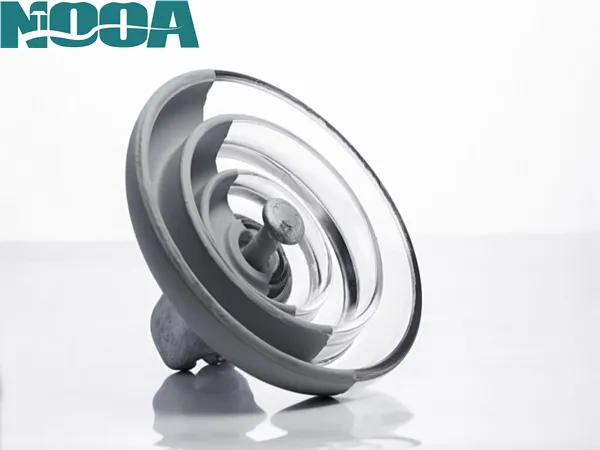
RTV silicone coating can significantly improve surface hydrophobicity and pollution performance, but it should not automatically be treated as a substitute for the creepage distance specified in the tender.
Room-temperature-vulcanized silicone rubber coatings can provide a hydrophobic surface.
This can reduce the tendency of moisture to form a continuous conductive film across the contaminated surface.
FAQ
1. Does higher pollution always require a longer creepage distance?
Generally, yes. Higher site pollution severity normally results in a higher required specific creepage distance, although the final design also depends on the applicable standard, insulator profile, material, and environmental conditions.
2. What is specific creepage distance?
Specific creepage distance is the creepage distance expressed relative to the applicable reference voltage, commonly in mm/kV.
3. What is the difference between creepage distance and arcing distance?
Creepage distance is measured along the insulating surface, while arcing or flashover distance is associated with the shortest electrical discharge path through the surrounding medium.
4. Why is creepage distance important for glass insulators?
Because contamination and moisture can create a conductive surface layer on an outdoor glass insulator. Adequate creepage distance helps reduce the risk of pollution flashover.
5. Does coastal installation require more creepage distance?
Coastal environments often have higher contamination risks because of salt deposition and humidity. The actual requirement should be determined from the site's pollution severity.
6. Does desert pollution require a high-creepage insulator?
Not necessarily in every case. Desert environments involve dust and sand contamination, but the required insulation design depends on the actual pollution and wetting conditions at the project site.
7. Can a fog-type glass insulator provide better pollution performance?
A fog-type or anti-pollution profile can provide a longer and better-distributed creepage path and may be appropriate for polluted environments, subject to the project design requirements.
8. Can RTV coating replace a longer creepage distance?
Not automatically. RTV coating improves hydrophobicity and can enhance pollution performance, but the applicable project specification and insulation-coordination methodology must determine whether any design reduction is permissible.
9. What should an EPC contractor provide to an insulator manufacturer?
At minimum, the manufacturer should receive the system voltage, highest system voltage, pollution severity or environmental data, required creepage distance, mechanical strength, applicable standards, altitude, and relevant electrical requirements.
10. Which standard should be used to determine creepage distance?
For outdoor insulation exposed to pollution, the IEC 60815 series is an important reference. The exact applicable standard and calculation method should be defined in the project specification.