Reverse Installation of Glass Insulator Strings
In high-voltage (HV) and ultra-high-voltage (UHV) overhead transmission lines, reverse installation (or inverted mounting) of toughened glass insulator strings is a specialized and critical structural configuration. It is primarily applied in jumper insulator strings or specialized tension insulator combinations under complex terrain and angular conditions.
-
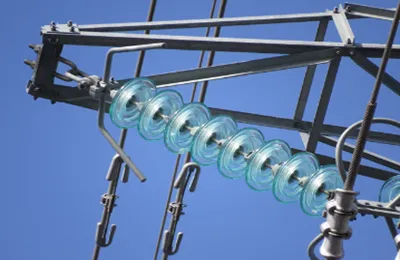
Standard Installation (Upright): The steel cap is at the top, the cement/pin is at the bottom, and the insulator shed opens downwards (bowl-shaped pointing down).
-
Reverse Installation (Inverted): The steel cap points downwards, the pin points upwards, and the insulator shed opens upwards.
On standard strain/tension points (main conductor tension strings), insulator strings carry immense mechanical tension and are arranged horizontally or at an incline. The "reverse-installed strings" are predominantly found in jumper insulator strings (or jumper cages) on tension towers that connect conductors on both sides.
Why Adopt Reverse Installation?
At tension towers, main conductors are anchored to the tower body via tension insulator strings, while electric current flows through non-tensioned "jumpers" routed around the tower. The primary reasons for inverting jumper insulator strings include:
1. Improving Pollution Flashover and Contamination Performance
In standard upright mounting, contamination easily accumulates under the inner surface of the shed, where rain wash cannot effectively clean it. Jumper strings often hang near-vertically or at sharp angles due to gravity and wind pressure. Inverting the insulator alters the exposure angle of the shed to rain washing. In harsh environments (e.g., severe dust storms, heavy rainfall), rain washes the surface more effectively, preventing continuous water film formation, thereby increasing wet flashover voltage and reducing pollution flashover risks.
2. Preventing Water Accumulation and Ice Hazards
In freezing or cold regions, water trapped inside upright insulators during freeze-thaw cycles can generate ice expansion stress, potentially damaging the insulator or causing glass disk shattering. When inverted—especially when paired with anti-icing shed profiles—trapped water drains rapidly, mitigating freeze-thaw structural risks.
3. Optimizing Electric Field Distribution and Corona Discharge
The electrical environment around jumper connections is significantly more complex than that of main line tension strings. Inverted installation, combined with specialized corona rings and grading rings, re-optimizes the electric field gradient near the high-voltage and grounded ends, substantially reducing localized corona discharge and radio interference (RI).
4. Enhancing Mechanical Stability and Wind Deflection Control
Jumper strings primarily support their own weight and withstand wind swing forces. Inverted structures, when configured with specific yoke plates and extension links, provide superior mechanical stability, preventing excessive jumper sway during heavy winds and maintaining critical clearance to the tower structure.
Key Advantages and Operational Considerations of Inverted Glass Insulators
Advantages:
-
Zero-Value Self-Shattering (Zero-Value Self-Explosion): If a toughened glass insulator experiences electrical breakdown or internal defects, it immediately shatters into a "stub" or "cap-and-pin" state. Maintenance personnel can instantly identify failures during visual or drone inspections, eliminating the risk of operating corrupted strings undetected.
-
Exceptional Ageing Resistance: Toughened glass maintains stable dielectric and mechanical properties under prolonged exposure to UV radiation and moisture without micro-cracking.
Technical Considerations & Precautions:
-
Preventing Debris Accumulation: Because the shed faces upward, measures must be taken against fallen leaves, bird droppings, or particulate accumulation inside the shed bowl. Consequently, inverted strings typically utilize wide-diameter, double-shed, or triple-shed anti-pollution glass insulators that rely on natural aerodynamic flushing.
-
Securing Cotter Key (W/R Pins) Fasteners: Under inverted orientation, gravitational and dynamic forces on the W-clip (locking pin) differ from standard setups. Strict verification of pin orientation and anti-dislodgement locking mechanisms is vital to prevent accidental uncoupling caused by aeolian vibration.
-
Drainage Verification: Design evaluations must ensure that the junction between the steel cap, pin, and cement mortar does not form a water-retaining pocket, which could trigger galvanic corrosion or freeze-thaw damage.
Typical Application Scenarios
-
500kV, 750kV, and 1000kV UHV AC/DC Lines: Jumper strings (particularly rigid jumper systems or jumper cage assemblies) on strain towers.
-
Heavy Pollution & High Wind Zones: Specifically targeted to prevent jumper wind deflection against tower bodies and contamination flashover.
-
Long-Span River & Canyon Crossings: Auxiliary suspensions and jumper positioners on heavy-duty anchor towers.