The Role of Internal Tensile Stress
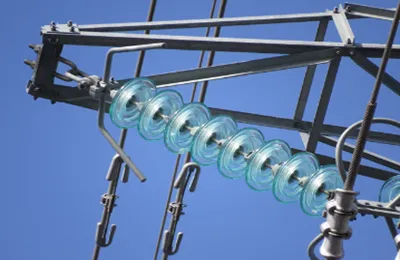
Suspension glass insulators occasionally “self-explode” due to internal stresses,surface defects,or environmental factors,a phenomenon that is actually a safety feature rather than a functional failure, Internal stress from the tempering process can cause glass insulators to shatter if micro-cracks develop or defects are present.
During manufacturing, glass insulators are thermally tempered to increase mechanical strength. This process creates compressive stress on the surface and tensile stress inside the glass core. If micro-defects occur during production, handling, or installation, these internal stresses can exceed the glass strength, leading to sudden self-explosion.
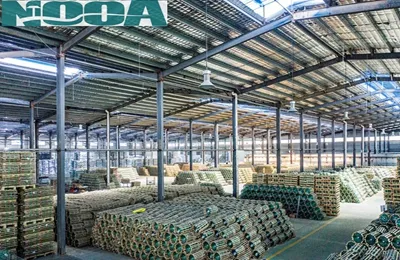
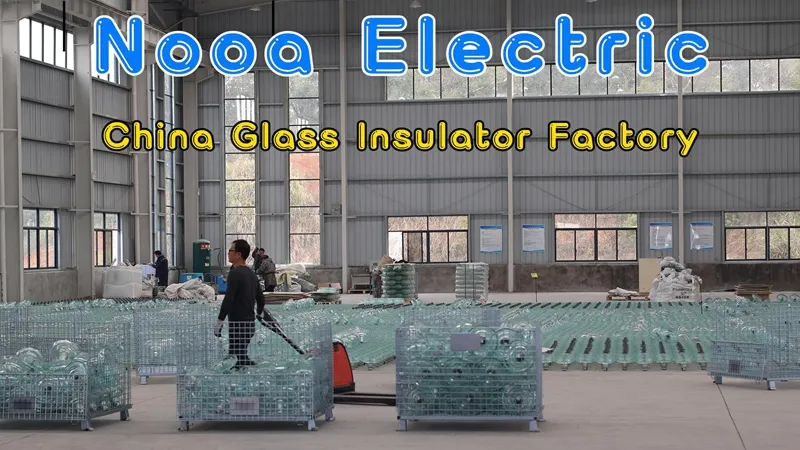
For EPC and international tender projects, Nooa Electric implements stringent quality control to minimize micro-cracks, ensuring predictable performance while preserving the safety advantage of visible failure.
Surface Defects and Handling Damage
Minor chips, scratches, or imperfections on the glass surface can trigger self-explosion under stress.
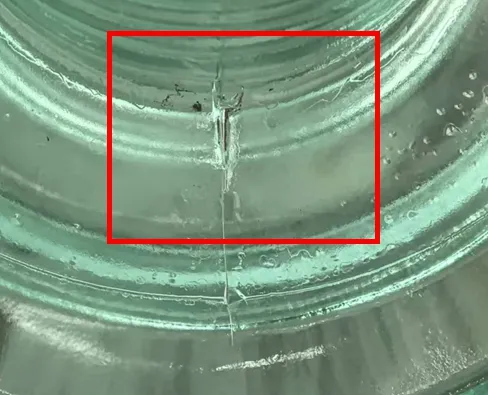
Even minor damage during transportation, storage, or installation can initiate fracture points in tempered glass insulators. Suspended under high-voltage line tension, these imperfections act as stress concentrators, making the insulator susceptible to sudden shattering.
Careful handling, protective packaging, and proper installation procedures reduce the risk of unwanted self-explosion in high-voltage suspension glass insulators.
Thermal and Environmental Factors
Rapid temperature changes and environmental conditions can accelerate self-explosion in tempered glass.
Suspension glass insulators exposed to direct sunlight, cold snaps, or rapid heating and cooling cycles experience differential expansion in the glass layers. Over time, these thermal stresses may trigger self-explosion in the presence of internal flaws.
EPC contractors and utility engineers consider local climate conditions when specifying glass insulators, using Nooa Electric anti-thermal-shock tempered glass for high-stress environments.
Manufacturing Impurities
Tiny inclusions, air bubbles, or foreign particles in the glass can act as weak points causing self-explosion.
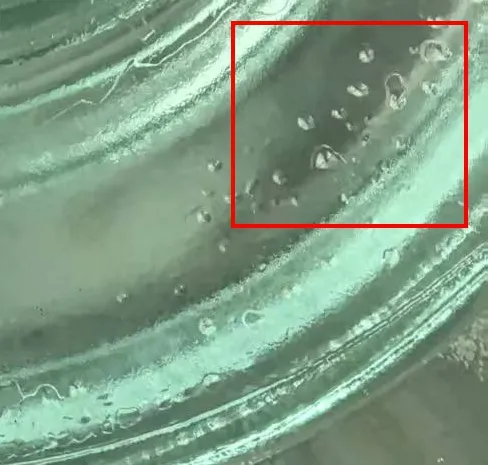
Even with precise raw material selection, small impurities can become stress concentration sites during tempering. These imperfections are the main reason why some glass insulators self-explode after years in service, despite appearing intact during routine inspections.
Nooa Electric employs advanced refining and inspection techniques to minimize impurities, ensuring high-quality, predictable glass insulators for international projects.
Electrical Overstress
High-voltage transients or lightning strikes can trigger self-explosion in susceptible units.
Although rare, extreme voltage surges can generate localized thermal expansion in the glass, particularly if micro-defects exist. This sudden stress can cause the insulator to shatter, preventing more catastrophic system damage.
Designing insulator strings with proper voltage grading and surge protection reduces the incidence of voltage-induced self-explosion.
Advantages of Self-Exploding Glass Insulators
Predictable shattering improves safety by visually signaling compromised units before catastrophic failure.
The self-explosion feature allows maintenance teams to identify defective insulators without relying on hidden damage or electrical testing alone. In large-scale transmission networks, this reduces unplanned outages, improves operational safety, and simplifies EPC project maintenance strategies.
Nooa Electric toughened glass insulators are engineered to maximize this visual safety benefit while minimizing spontaneous failures during transportation and installation.
Preventive Measures to Reduce Unintended Self-Explosion
Proper manufacturing, careful handling, and appropriate storage minimize accidental shattering.
Key preventive measures include:
1.Using high-quality raw materials free from inclusions
2.Maintaining precise tempering and annealing control
3.Applying protective packaging and cushioning during transport
4.Ensuring correct installation and handling procedures
5.Selecting designs suitable for local thermal and environmental conditions
These measures ensure that self-explosion occurs only in controlled, predictable circumstances, enhancing safety for EPC projects and utility operations.
FAQ – Self-Explosion of Suspension Glass Insulators
1. Why do suspension glass insulators self-explode?
They self-explode due to internal tensile stress, surface defects, impurities, or environmental factors.
2. Is self-explosion a defect or a safety feature?
It is a controlled safety feature designed to make damaged units visible before causing catastrophic line failure.
3. Can self-explosion be prevented entirely?
While careful manufacturing, handling, and installation reduce risk, some self-explosion is inevitable and beneficial for safety.
4. Do all glass insulators self-explode?
Only tempered (toughened) glass insulators exhibit this controlled self-breaking characteristic.
5. Does Nooa Electric offer anti-self-explosion glass insulators?
Nooa Electric offers tempered glass with optimized tempering and handling controls to minimize accidental explosions during transport and installation.
6. How does temperature affect self-explosion?
Rapid heating or cooling can create thermal stress, triggering shattering if micro-defects exist.
7. Can mechanical damage during transport cause self-explosion?
Yes, scratches, chips, or impact during transportation may lead to premature shattering under operational stress.
8. How do maintenance teams identify exploded units?
Broken glass insulators shatter visibly, allowing crews to quickly replace compromised units.
9. Does self-explosion affect electrical performance before failure?
No, insulators perform reliably until they reach the stress point that triggers controlled shattering.
10. Why is self-explosion beneficial for EPC projects?
It reduces hidden defects, simplifies inspections, and enhances operational safety across high-voltage transmission networks.