Why Are Suspension Glass Insulators?
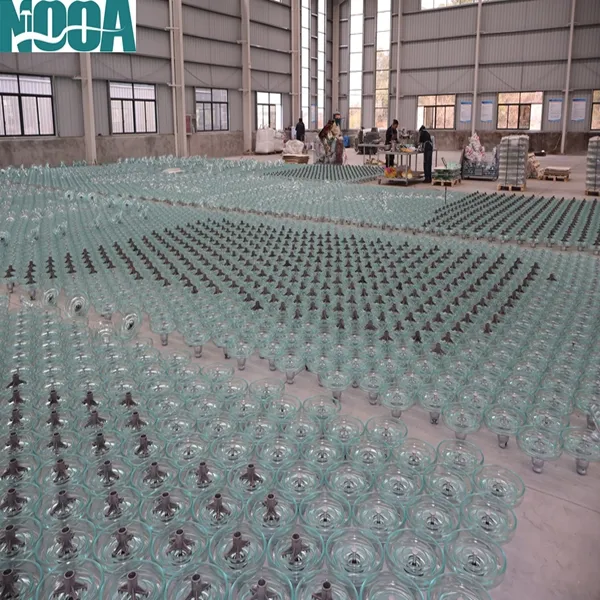
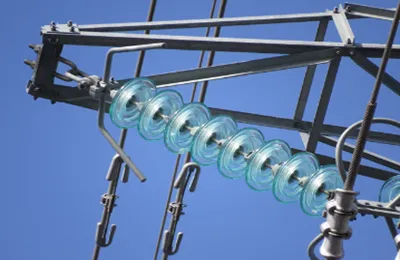
Suspension glass insulators are widely adopted in ultra-high voltage (UHV) AC transmission lines due to their outstanding electrical performance, superior mechanical strength, excellent long-term reliability, and lower life-cycle cost. These advantages enable them to meet the stringent technical requirements of transmission systems operating at 220 kV, 330 kV, 400 kV, 500 kV, 800 kV, and even 1000 kV. As a professional manufacturer of toughened glass insulators, Nooa Electric specializes in supplying IEC and ANSI standard suspension glass insulators for utilities, EPC contractors, and transmission line projects worldwide.
1. Optimized Electrical Performance for Ultra-High Voltage Applications
Tempered glass insulators are specifically suited for ultra-high voltage environments because they provide more uniform voltage distribution along the insulator string.
Compared with porcelain, tempered glass has a higher dielectric constant, giving each unit a larger capacitance. When connected in series, the influence of stray capacitance from conductors and tower structures is reduced, resulting in more even voltage distribution throughout the entire string.
This effectively minimizes:
-
Corona discharge
-
Corona power losses
-
Radio interference (RIV)
-
Local electric field concentration
As a result, glass insulators help maintain stable insulation performance under continuous high electric field conditions. Furthermore, tempered glass possesses exceptional dielectric strength.
Its electrical breakdown strength is approximately 3.8 times higher than porcelain, while its dense and pore-free internal structure eliminates common ceramic defects such as micro-cracks and hidden porosity.
Even after more than 20 years of service, the degradation of key insulation parameters is typically less than 5%, making glass insulators highly suitable for long-term operation on UHV transmission systems.
2. Superior Mechanical Strength and Environmental Resistance
Ultra-high voltage transmission lines experience enormous mechanical loads caused by:
1.Heavy conductor tension
2.Wind loads
3.Ice accumulation
4.Aeolian vibration
5.Galloping conductors
6.Seismic activity
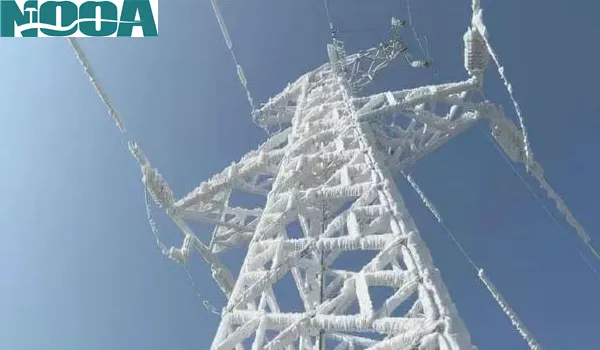
Tempered glass provides tensile strengths ranging from 80–120 MPa, approximately 1–2.2 times greater than conventional porcelain insulators.
This enables glass insulators to withstand continuous mechanical loading with excellent fatigue resistance and impact strength throughout decades of service.
In addition, glass offers outstanding weather resistance.
Unlike porcelain, glass does not suffer from:
Surface powdering
Aging cracks
Moisture penetration
Internal deterioration
Its smooth and dense surface also provides superior self-cleaning performance, allowing rainwater to wash away contaminants efficiently and reducing pollution flashover risks in most service environments.
3. Simplified Inspection and Reduced Maintenance Costs
One of the greatest advantages of glass insulators is their unique self-shattering characteristic.
When insulation failure occurs due to extreme overvoltage or aging, the glass shell automatically shatters while the cap and pin continue to maintain the required mechanical load.
This provides several important benefits:
-
Failed units can be visually identified from the ground
-
No extensive zero-value testing is required
-
Maintenance efficiency is significantly improved
-
Outage risks are reduced
-
Maintenance costs are minimized
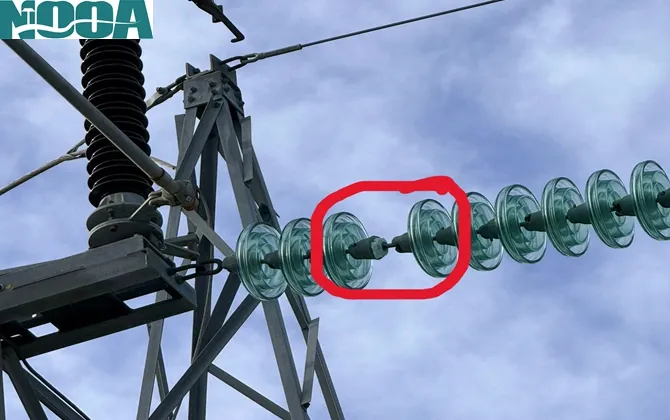
This feature is particularly valuable for long-distance transmission lines located in remote or mountainous regions where inspection resources are limited. Nooa Electric has supplied glass insulators for numerous utility and EPC projects where reduced maintenance requirements and improved inspection efficiency are critical selection factors for transmission asset owners.
4. Lower Life-Cycle Cost for Long-Term Infrastructure
Although the initial purchase price of glass insulators may be slightly higher than some porcelain alternatives, their overall life-cycle economics are considerably better.
Advantages include:
-
Extremely long service life
-
Minimal aging
-
Lower maintenance costs
-
Lower inspection costs
-
Reduced replacement frequency
-
Lower outage risk
Compared with composite insulators, glass insulators also provide greater long-term stability for infrastructure designed to operate for 30–50 years or longer.
Consequently, many utilities and transmission authorities continue to specify suspension glass insulators as the preferred solution for high-voltage and ultra-high-voltage AC transmission projects.
Glass suspension insulators remain the preferred choice for modern high-voltage and ultra-high-voltage AC transmission lines because they combine outstanding electrical characteristics, exceptional mechanical strength, excellent durability, easy visual inspection, and the lowest overall life-cycle cost. These advantages enable utilities and EPC contractors to build transmission networks that are safer, more reliable, and more economical over decades of operation.
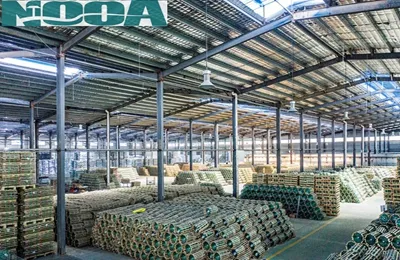
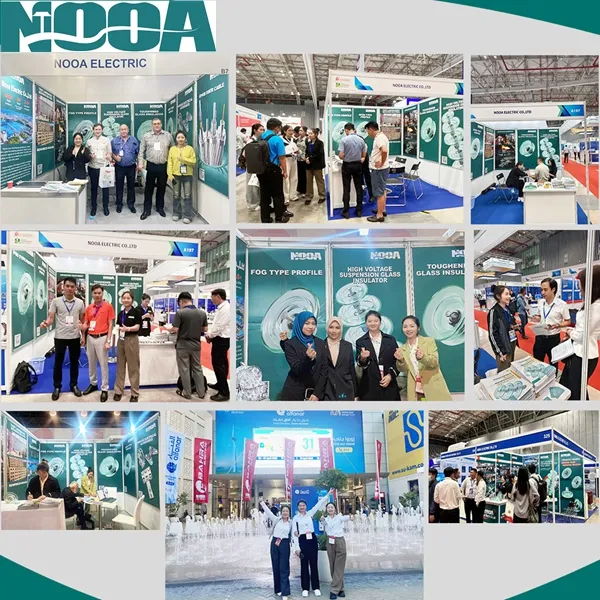
With over 20 years of manufacturing experience, Nooa Electric has successfully supplied toughened glass insulators for transmission line projects across Asia, Africa, the Middle East, South America, and Eastern Europe. Our products are widely used in national grid expansion, renewable energy integration, cross-border interconnection projects, and EPC turnkey transmission systems ranging from 110 kV to 1000 kV. Backed by comprehensive quality documentation, factory acceptance testing (FAT), and international logistics support, Nooa Electric has become a trusted manufacturing partner for global utilities and transmission contractors.