News Center

To Konw More Our Company News and Exhibition Topics Here.
Toughened glass insulators,Glass Insulator Test,Glass Insulator Factory

What is Thermal Shock Testing?

Date:2025-09-24Tags:Toughened glass insulators,Glass Insulator Test,Glass Insulator Factory

What is Thermal Shock Testing?

Thermal Shock Testing is a rigorous environmental test used to evaluate the ability of a product or material to withstand sudden and extreme changes in temperature. The core purpose is to accelerate and reveal failures that occur due to thermal expansion and contraction stresses.

Imagine taking a cold glass dish from the refrigerator and immediately placing it in a hot oven. It would likely shatter. Thermal shock testing applies this same principle in a controlled, repeatable manner to identify weaknesses in manufactured components, including glass insulators.


Why is it Done? The Key Objectives

The test is not about simulating normal daily temperature cycles. Instead, it aims to:

Uncover Latent Defects: Identify manufacturing flaws like micro-cracks, poor seals, or material inconsistencies that would not be visible under normal operating conditions.

Assess Structural Integrity: Determine if a component can survive rapid temperature transitions without cracking, delaminating, or breaking.

Evaluate Material Compatibility: Test how well different materials bonded together (e.g., glass to metal seals in insulators) respond to stress, as different materials expand and contract at different rates.

Accelerate Life Testing: Simulate years of thermal cycling stress in a matter of hours or days to predict long-term reliability and service life.


How Does it Work? The Testing Process

The test involves rapidly transferring a product between two temperature-controlled chambers or zones.

Extreme Temperatures: The test typically uses two extremes: a very high temperature (e.g., +125°C or +150°C) and a very low temperature (e.g., -40°C or -55°C).

Rapid Transfer: The device under test (DUT), such as a glass insulator, is moved from the hot chamber to the cold chamber (and vice versa) in less than 30 seconds, often just a few seconds. This rapid transfer is critical to creating the "shock" effect.

Dwell Time: The DUT is held at each extreme temperature for a specified period (the "dwell time") to ensure the entire component reaches the target temperature.

Cycling: This process is repeated for a predetermined number of cycles (e.g., 50, 100, 500 cycles).


Common Transfer Methods:

Two-Chamber System: The most common method. The DUT is physically moved by a basket or elevator between two separate chambers.

Three-Zone System: The DUT moves between hot, ambient, and cold zones within a single chamber.

Application to Glass Insulators

This test is highly relevant to glass insulators for several critical reasons:

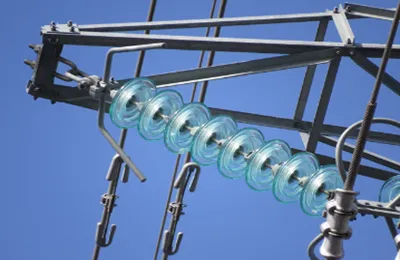
Inherent Vulnerability: Glass is a brittle material with low thermal conductivity, meaning it doesn't distribute heat evenly quickly. This makes it highly susceptible to thermal shock.


Real-World Conditions: Insulators in the field are exposed to sudden environmental changes. Examples include:

A cold rainstorm hitting a sun-heated insulator.

A sudden electrical fault (like a short circuit) that generates intense, localized heat.

Quality Control: For manufacturers, thermal shock testing is a vital part of quality assurance. It helps weed out insulators with internal stresses or micro-cracks that could lead to catastrophic failure on the power line.


What Failures Does it Look For?

In glass insulators, a successful thermal shock test reveals failures such as:

Cracking or Shattering: The most obvious failure, where the glass body fractures.

Puncture or Flashover: If a crack compromises the electrical insulation path, it can lead to a puncture (current flowing through the insulator) instead of over it.

Degradation of the Hydrophobic Coating: For composite insulators with a silicone rubber coating, the test can check if the coating cracks, peels, or loses its water-repellent properties.


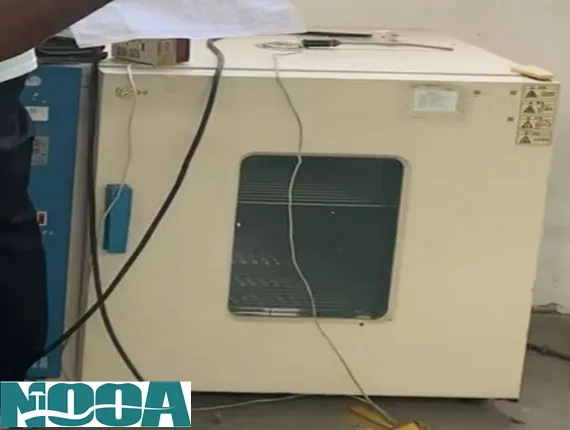
Do You Wanna Know How Does Nooa Electric Do Thermal Shock Testing for Each Glass Insulator : Click Below Picture for Browsing!

Thermal Shock Testing

We use cookies and other tracking technologies to improve your browsing experience on our website, to show you personalized content and targeted ads, to analyze our website traffic, and to understand where our visitors are coming from.