What Are Tension Fittings?
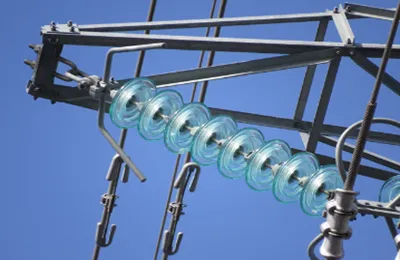
Tension fittings are used to fix and bear the tensile force of conductors.
They are mainly installed at terminal towers, angle towers, and branch towers, where the conductor must be securely anchored and the mechanical load transferred to the tower.
Typical products: tension clamp, clevis, U-shackle, tension insulator string, etc.
What Are Suspension Fittings?
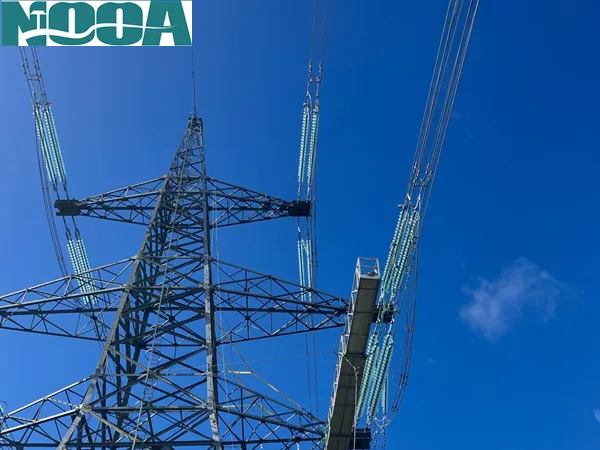
Suspension fittings are used to support and hang conductors or ground wires, carrying the conductor’s weight and allowing a certain amount of swing or movement.
They are typically installed on straight-line towers or small-angle towers.
Typical products: suspension clamp, link plate, vibration damper, shackle, etc.
What Are Splicing Fittings?
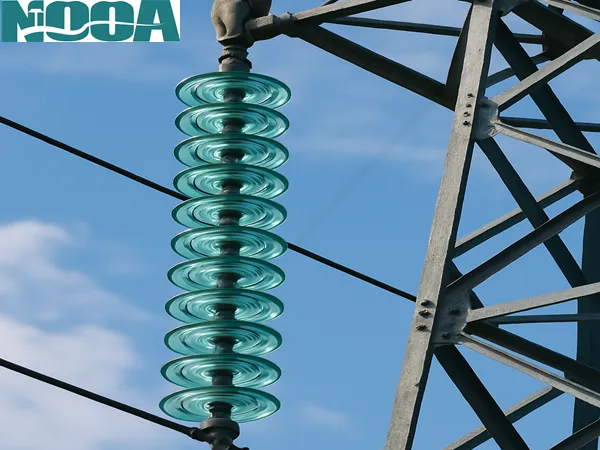
Splicing fittings are designed to connect two sections of conductors or ground wires, ensuring both mechanical strength and electrical continuity.
Typical products: compression splice sleeve, explosive splice sleeve, preformed splice, etc.
2. Different Applications of the Three Types of Power Fittings
Type Typical Installation Location Main Force Direction Primary Function Typical Application
Tension Fittings Terminal, angle, or branch towers Axial tension Fix and bear conductor tensile force Long spans or large-angle sections
Suspension Fittings Straight or small-angle towers (≤30°) Vertical gravity Support conductor and allow swinging Straight line spans
Splicing Fittings Middle section of conductors Axial tension Connect two conductor sections Conductor extension or repair sections
3. Selection Principles of the Three Types of Fittings
1️⃣ Tension Fittings Selection Principles
Rated failure load ≥ 1.5 × the calculated conductor tension.
Gripping strength ≥ 95% of the conductor’s breaking load.
Use hot-dip galvanized steel or aluminum alloy materials.
For coastal or heavily polluted areas, use anti-corrosion coated types.
Prefer preformed tension clamps for simple and safe installation.
2️⃣ Suspension Fittings Selection Principles
Load capacity ≥ 1.2 × maximum working tension of the conductor.
Clamp liner should fit the conductor diameter to prevent damage.
For long spans, add vibration dampers to reduce wind vibration.
Use aluminum alloy + rubber insert or preformed suspension clamp for long service life.
The structure should allow enough flexibility and damping performance.
3️⃣ Splicing Fittings Selection Principles
Electrical resistance ≤ 1.1 × that of an equal-length conductor.
Tensile strength ≥ 95% of conductor breaking load.
Choose compression, explosive, or preformed type according to conductor material.
Surface must be galvanized or anodized to prevent corrosion.
Ensure complete matching with conductor type and size.
4. Installation Guidelines
Pre-Inspection: Confirm all fittings meet the technical specifications and are free of damage or deformation.
Installation Order: Typically, splicing fittings are installed first during conductor stringing, followed by suspension or tension fittings at tower points.
Torque Control: Bolted fittings must be tightened to the manufacturer’s recommended torque to avoid slippage or excessive compression.
Alignment: Ensure the conductor and fitting are aligned axially to avoid uneven stress.
Anti-Corrosion Treatment: After installation, apply protective grease or sealant at exposed metal parts for long-term durability.
Final Check: Perform mechanical tension and insulation clearance checks before energizing the line.
5. FAQ
Q1: What is the difference between tension and suspension fittings?
A: Tension fittings are used to fix conductors and bear tensile load, while suspension fittings are used to support the conductor’s weight.
Tension fittings carry axial force, while suspension fittings mainly bear vertical gravity and allow flexibility.
Q2: What should be noted during the installation of splicing fittings?
A: The fitting must match the conductor’s type and cross-section precisely.
After installation, the joint resistance should not exceed 1.1 times that of an equal-length conductor, and the tensile strength should be no less than 95% of the conductor’s rated breaking load.
Q3: Why are vibration dampers needed for suspension clamps?
A: In long-span or high-wind areas, conductors may experience wind-induced vibration.
Installing Stockbridge dampers helps absorb and dissipate vibration energy, preventing conductor fatigue or strand breakage.
Q4: How does the selection of tension clamps relate to the conductor type?
A: The clamp must match the conductor’s diameter, structure, and material (e.g., ACSR, OPGW, ADSS).
Mismatched sizes may cause conductor slippage or surface damage.
6. Nooa Electric's Summary
Tension Fittings → For anchoring and bearing tension.
Suspension Fittings → For supporting and damping vibration.
Splicing Fittings → For connecting and ensuring conductivity.
Proper selection of these three fitting types ensures mechanical reliability, electrical safety, and long-term durability of overhead power transmission lines.