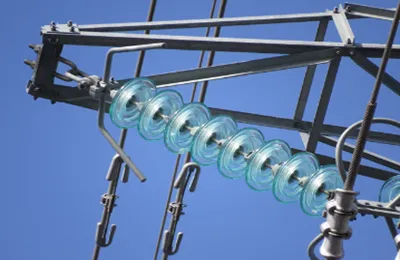
HVDC (High-Voltage Direct Current) transmission lines operate under continuous DC stress, long-distance routing, and often extreme environments. This leads to unique challenges such as pollution flashover, electric field distortion, space charge accumulation, and environmental stress—all requiring specialized insulation design, system optimization, and material selection.
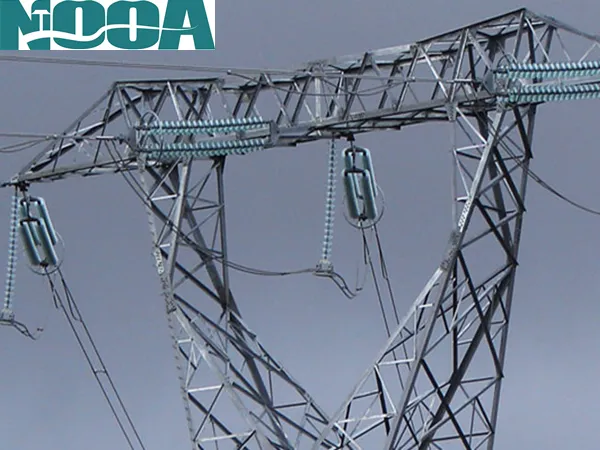
1. Severe Pollution & Flashover Risk
Challenge:
DC systems attract and accumulate more contaminants → higher flashover risk than AC.
Why it happens:
-
Continuous DC electric field drives ion migration
-
Pollutants (salt, dust, industrial particles) stick more easily
-
Forms conductive layers on insulator surfaces
Typical environments:
-
Coastal (salt fog)
-
Desert (sand/dust)
-
Industrial zones (chemical pollution)
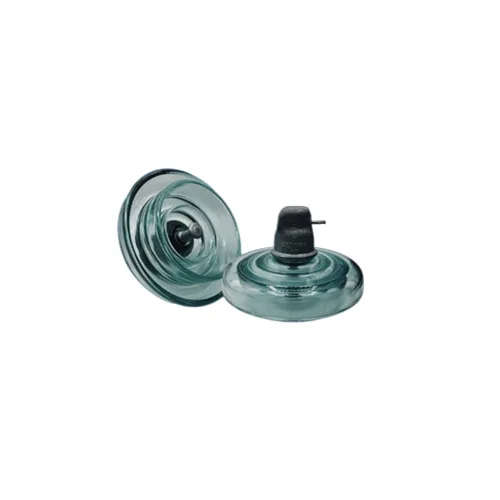
✅ Solutions: We recommend HVDC Glass Insulator with extended creepage distance solutions for heavy pollution HVDC environments
-
Increase creepage distance (30–50% higher than AC)
-
Use anti-pollution profile glass insulators
-
Apply RTV silicone coatings (in extreme cases)
-
Optimize insulator string configuration
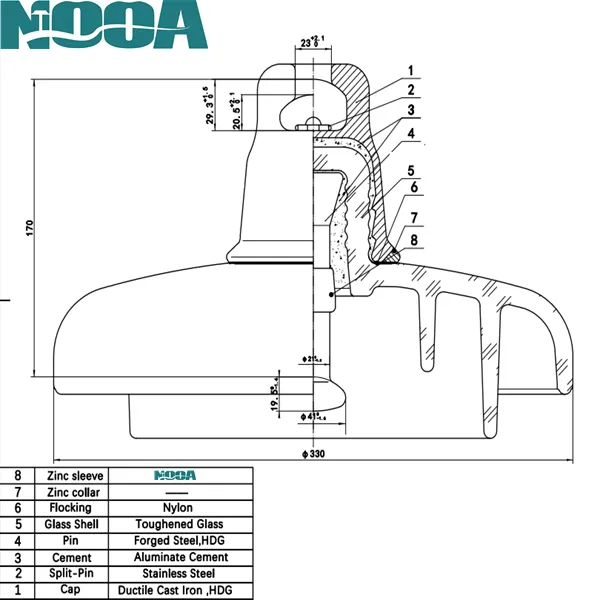
2. Non-Uniform Electric Field Distribution
Challenge:
Voltage distribution along the insulator string is uneven → local overstress.
Risks:
-
Localized electric field concentration
-
Partial discharge
-
Premature failure
✅ Solutions:
-
Install grading rings (corona rings)
-
Optimize string length and geometry
-
Use finite element electric field simulation (FEM) in design
3. Space Charge Accumulation & Polarity Effects
Challenge:
DC causes surface charge buildup → distorts electric field and reduces insulation performance.
Unique HVDC issues:
-
Charge accumulation on insulator surface
-
Different behavior under positive vs negative polarity
✅ Solutions:
-
Use toughened glass insulators (stable material, no aging)
-
Optimize shed profile to reduce charge concentration
-
Design for polarity-specific performance testing
4. Ultra-Long Distance & Multi-Climate Exposure
Challenge:
HVDC lines span hundreds to thousands of km → multiple harsh environments simultaneously.
Combined stresses:
-
Humidity + pollution
-
High altitude + UV
-
Heat + sandstorms
✅ Solutions:
-
Segment-based design (different insulation levels per region)
-
Select multi-environment resistant materials
-
Increase safety margins in insulation coordination
5. Extreme Weather Conditions
Challenge:
HVDC lines are often routed through the most difficult terrains.
Examples:
-
❄️ Icing → changes electric field & leakage path
-
🌵 Desert → abrasion + dust accumulation
-
🌊 Coastal → salt corrosion
-
⛰️ High altitude → reduced air insulation strength
✅ Solutions:
-
Use aerodynamic, open-profile insulators
-
Apply anti-icing or special coatings
-
Increase insulation level at high altitude
-
Select high mechanical strength (e.g., 210kN–550kN)
6. Corona Discharge & Electrical Interference
Challenge:
HVDC produces more stable corona → energy loss and environmental issues.
Effects:
-
Audible noise
-
Radio interference (RIV)
-
Power loss
✅ Solutions:
-
Install corona rings / grading rings
-
Use large-diameter conductors or bundled conductors
-
Optimize electric field distribution
7. Long-Term Aging & Material Stability
Challenge:
Continuous DC stress accelerates material degradation.
Risks:
-
Electrochemical aging
-
Surface tracking
-
UV + pollution combined degradation
✅ Solutions:
8. Inspection & Maintenance Complexity
Challenge:
Problems develop gradually but fail suddenly.
Issues:
-
Pollution not always visible
-
Charge effects invisible
-
Remote locations
✅ Solutions:
-
Regular live-line inspection
-
Use drones / infrared monitoring
-
Implement condition-based maintenance
Q&A
1. Why do HVDC transmission lines face more severe pollution problems than AC lines?
Because DC voltage creates a continuous electric field that attracts airborne particles such as dust, salt, and industrial pollutants. These contaminants accumulate on insulator surfaces and form conductive layers, increasing the risk of flashover
2. How can pollution flashover be prevented in HVDC systems?
By increasing creepage distance, using anti-pollution type insulators, applying RTV silicone coatings when necessary, and optimizing the insulator string configuration.
3. What is the main difference in electric field behavior between AC and HVDC?
In AC systems, the electric field alternates and remains relatively uniform, while in HVDC systems, the field is constant and often non-uniform, leading to localized electrical stress.
4. How can space charge effects be minimized?
By using stable materials like toughened glass, optimizing insulator profiles, and designing for polarity-specific performance.
5.What solutions are used for harsh environmental conditions?
Using high-strength insulators, increasing insulation levels, applying special coatings, and selecting designs suitable for specific environments (e.g., anti-fog or aerodynamic profiles).