Understanding Corona Rings and Glass Insulators with Nooa Electric: A Symbiotic Relationship in High-Voltage Systems
About high-voltage electricity transmission, the reliable and safe delivery of power hinges on the performance of crucial components like glass insulators and corona rings. While seemingly simple, their interplay is a fascinating example of engineering design to control powerful electrical forces. In essence, glass insulators provide the necessary electrical separation, while corona rings protect these insulators from a destructive phenomenon known as corona discharge.
1.What Is the Fundamental Role of Glass Insulator?
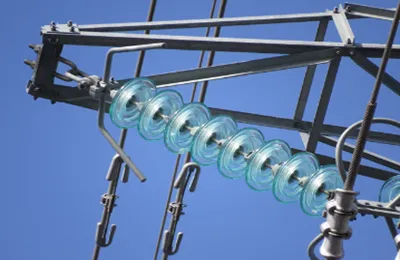
A glass insulator is a device designed to support and separate high-voltage conductors from a grounded structure, such as a transmission tower. Fashioned from specially formulated toughened glass, these insulators possess high dielectric strength, meaning they resist the flow of electric current. Their characteristic bell shape and series of skirts are not arbitrary; they are meticulously designed to increase the "creepage distance" – the path an electrical arc would have to travel along the insulator's surface to reach the grounded tower. This design helps to prevent flashovers, which are essentially short circuits through the air.
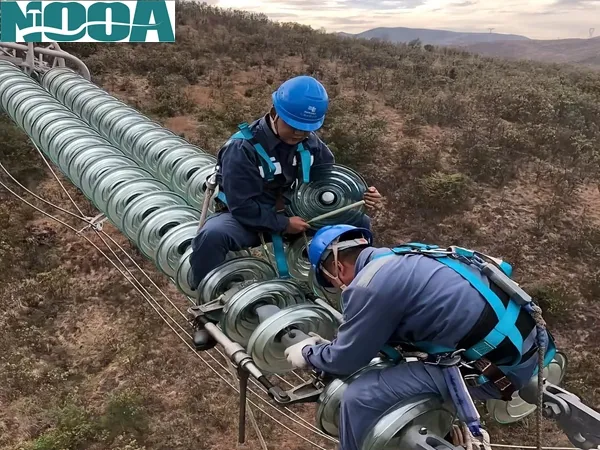
However, a string of glass insulators supporting a high-voltage line is not under uniform electrical stress. The electric field, a region of invisible force created by the high voltage, is not evenly distributed. The highest concentration of this electric field occurs at the "energized end" of the
insulator string – the point closest to the power line. This intense electrical pressure at a specific point is the root of a significant problem.
2. What Is Corona Discharge?
When the electric field strength at the surface of a conductor or insulator hardware exceeds the dielectric strength of the surrounding air, it can ionize the air molecules. This ionization creates a luminous, often purplish glow, accompanied by a hissing or crackling sound. This phenomenon is called corona discharge.
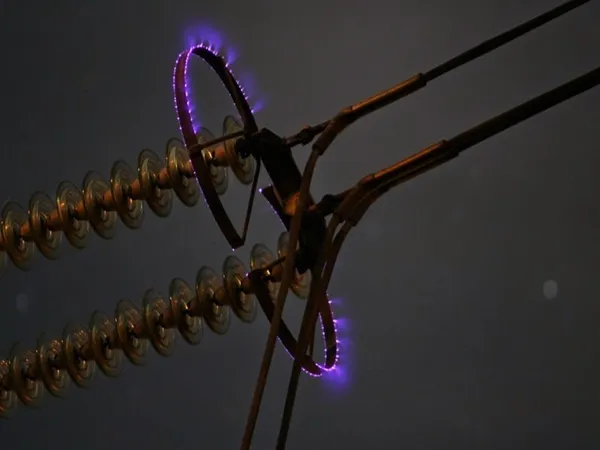
3.What Is The Menace of Corona Discharge?
While it might appear as a minor energy leak, corona discharge has several detrimental effects on a power transmission system:
Power Loss: It represents a continuous leakage of electrical energy into the atmosphere.
Audible and Radio Noise: The discharge generates audible noise and electromagnetic interference that can disrupt radio and communication signals.
Material Degradation: The chemical byproducts of corona discharge, primarily ozone (O 3 ) and nitric acid (HNO 3 ) formed in the presence of humidity, are highly corrosive. Over time, these substances can degrade the surface of the glass insulator and its metal fittings.
Flashover Precursor: In some instances, severe corona discharge can create a conductive path in the air, increasing the likelihood of a complete flashover, which can cause power outages and damage to equipment.
4.What’s the Best Solution for Corona Discharge: The Corona Ring
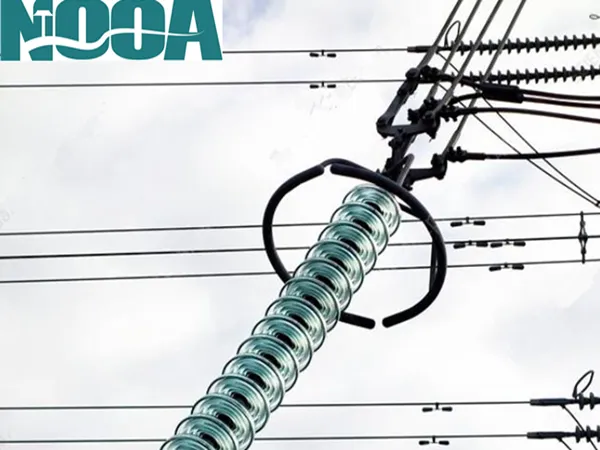
This is where the corona ring comes into play. A corona ring is a smooth, circular or toroidal (doughnut-shaped) conductive ring that is installed at the energized end of the glass insulator string. It is electrically connected to the high-voltage conductor.
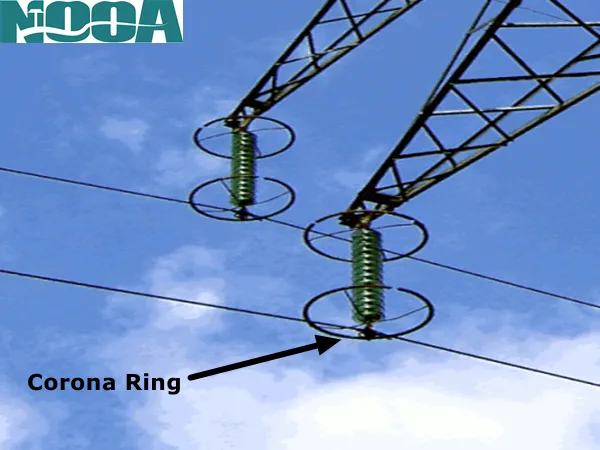
The primary function of a corona ring is to modify and control the electric field. By introducing a larger, smoother conductive surface, the corona ring effectively redistributes the electric field lines, making them more uniform across the insulator string. It significantly reduces the high concentration of the electric field at the sharp points of the insulator's hardware (the cap and pin).
This redistribution of the electric field has several critical benefits:
Prevents Corona Discharge: By lowering the peak electric field strength below the threshold required to ionize the air, the corona ring prevents the formation of corona discharge.
Protects the Insulator: By mitigating corona, the ring protects the glass insulator and its hardware from the corrosive effects of ozone and nitric acid, thereby extending their service life and ensuring their long-term reliability.
Improves Voltage Distribution: The corona ring also helps to equalize the voltage distribution across the individual insulator units in a string. Without a ring, the first few insulators at the energized end bear a disproportionately high share of the total voltage. The ring helps to spread this voltage more evenly, reducing the electrical stress on any single insulator.
So, according to above mentioned by Nooa Electric: the relationship between glass insulators and corona rings is a critical partnership in high-voltage engineering. The glass insulator provides the essential insulation, while the corona ring acts as a vital guardian, protecting the insulator from the damaging effects of high electric fields. This elegant and effective solution ensures the safe, reliable, and efficient transmission of electrical power over long distances. For transmission lines operating at very high voltages, typically 230 kilovolts (kV) and above, the presence of corona rings is not just beneficial but essential for the longevity and proper functioning of the entire system.