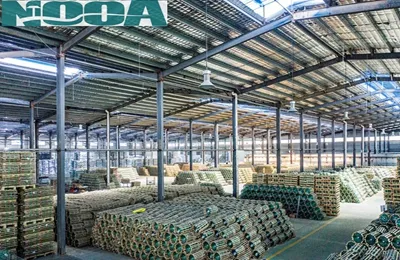
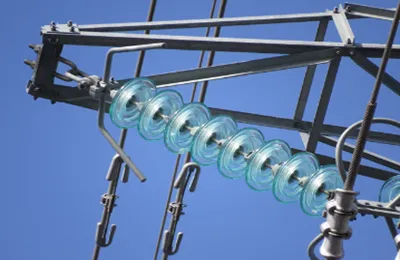
High-Tension (HT) lines, which operate at high voltage levels (typically above 1 kV), require insulators that can withstand both high electrical stress and challenging environmental conditions. The types of insulators used in HT lines are designed to provide electrical insulation, mechanical support, and resistance to external factors like weather, pollution, and mechanical loading. Here are the main types of insulators used in HT lines:
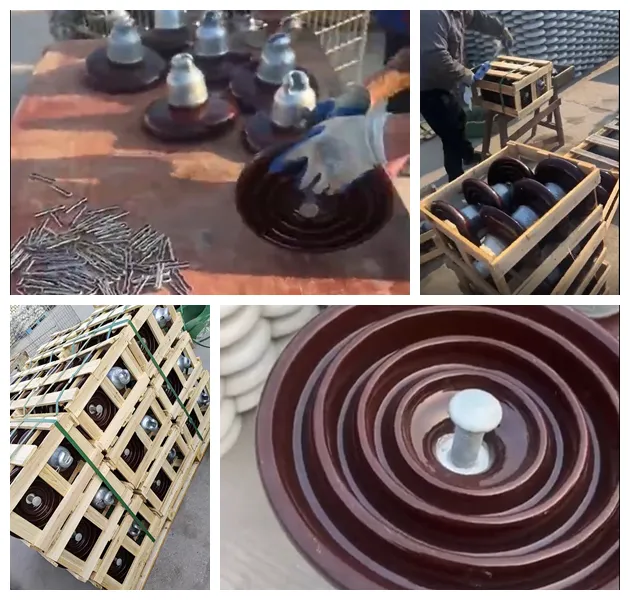
1. Porcelain Insulators
Description: Porcelain insulators are made from ceramic materials and are widely used for medium to high voltage applications. They have a high dielectric strength, are durable, and offer good mechanical strength.
Advantages:
High mechanical strength
Good electrical insulating properties
Resistant to UV and weathering
Applications: Commonly used in HT overhead transmission lines and substation equipment.
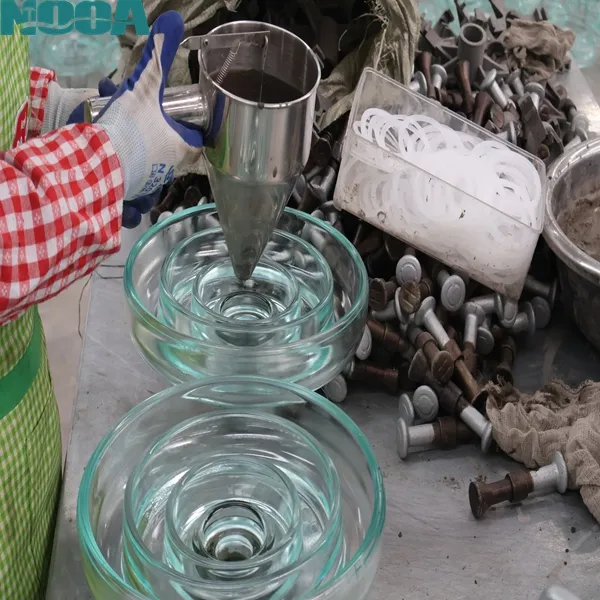
2. Glass Insulators
Description: Glass insulators are made of toughened glass, which is highly resistant to environmental factors and electrical stress. They are transparent, allowing for easy inspection of their condition.
Advantages:
High resistance to contamination and pollution
Better visibility for inspection
Can withstand high mechanical stresses
Applications: Frequently used in areas with high contamination levels (pollution or salt), or where insulator maintenance and inspection are crucial.
3. Polymer (Composite) Insulators
Description: Polymer insulators are made with a combination of polymeric materials, usually silicone rubber, and a fiberglass core. These insulators have a lighter weight compared to porcelain and glass insulators.
Advantages:
Lightweight and easy to transport and install
High resistance to corrosion and contamination
Lower risk of breakage compared to porcelain and glass
Applications: Increasingly used in HT lines, especially in areas prone to pollution or coastal environments, as they are more resistant to the accumulation of dirt and moisture.
4. Suspension Insulators
Description: Suspension insulators are designed to hang the conductors from the towers and are used for high-voltage transmission lines. These insulators are typically made of porcelain or glass discs connected in series.
Advantages:
Provide mechanical strength to support the weight of the conductors
Suitable for long-distance transmission lines
Applications: Used in HT transmission lines that span long distances, especially for 33 kV and above voltage lines.
5. Pin Insulators
Description: Pin insulators are mounted directly on the supporting structure (typically a metal pin on a utility pole) and are commonly used for medium to high voltage applications. These insulators have a metal base that allows them to be fixed onto the pole or tower.
Advantages:
Simple and economical design
Easy to install and maintain
Applications: Primarily used in overhead HT lines for voltages ranging from 11 kV to 66 kV.
6. Line Post Insulators
Description: Line post insulators are mounted vertically on the towers and are used to support overhead lines. These insulators are used in circuits with relatively higher mechanical loads.
Advantages:
Provide strong mechanical support
Suitable for areas with high mechanical stress
Applications: Often used for 33 kV to 220 kV HT lines, especially in areas with challenging environmental or load conditions.
7. Shackle Insulators
Description: Shackle insulators are smaller than pin insulators and are typically used in lower voltage HT lines. They are mounted on the poles to provide insulation between the conductor and the pole.
Advantages:
Simple design and installation
Economical
Applications: Used in lower voltage HT lines (typically up to 11 kV), especially in rural or less developed areas.
8. Post Insulators
Description: Post insulators are used to support high-voltage conductors in substations or on overhead lines, providing insulation between the line and the supporting tower. They are often used when space constraints or mechanical stress are an issue.
Advantages:
Compact design
Can handle high mechanical loads
Applications: Commonly used for 33 kV and above transmission lines, and in substations for supporting bus bars and switches.
9. Disc Insulators
Description: Disc insulators are typically used in high-voltage lines and consist of several porcelain or composite discs connected in series. They are commonly used in suspension systems for overhead power lines.
Advantages:
Can handle high mechanical stresses
Can be used in both horizontal and vertical installations
Applications: Often used in 66 kV and above transmission lines.
10. Cap and Pin Insulators
Description: A type of insulator that combines a cap and pin design to provide insulation for HT lines. The cap is mounted on the pin, which is fixed on the structure, allowing the conductor to rest on top.
Advantages:
Compact and reliable design
Applications: Commonly used for 33 kV HT lines.
Factors Influencing the Choice of Insulator:
Voltage Level: Higher voltage lines typically use suspension or post insulators.
Environmental Conditions: Areas with high pollution levels or coastal regions may require glass or composite insulators for better resistance to contamination.
Mechanical Load: Insulators need to withstand the mechanical load of the conductor, wind, and other external forces.
Space and Installation Constraints: In areas with limited space, smaller insulators like post or cap and pin types may be more suitable.
Above are the common electrical insulators used in HT lines. Do you wanna know more installation details? Contact HUNAN NOOA now!
Applications Of HT Line Insulators
HT insulators are widely used in transmission, substations, renewable energy, and industrial power systems.
Common applications include:
High-voltage overhead transmission lines
Utility substations
Wind farm grid connections
Solar power transmission systems
Railway electrification projects
Industrial power distribution networks
For large-scale infrastructure projects, reliable insulators are essential for long-term grid stability.
FAQ About HT Line Insulators
Which insulator is most commonly used in HT lines?
Suspension insulators are the most commonly used type for medium and high-voltage transmission lines.
Why are glass disc insulators preferred for transmission lines?
Glass disc insulators provide excellent electrical insulation, strong mechanical performance, and easy visual inspection.
What voltage range uses pin insulators?
Pin insulators are generally used for systems up to 33kV.
Are composite insulators used in HT lines?
Yes. Composite long rod insulators are increasingly used for pollution-prone environments and modern transmission systems.
How do EPC contractors select HT insulators?
Selection depends on voltage level, pollution conditions, mechanical load, environmental factors, and compliance requirements.
Why is IEC certification important for HT insulators?
IEC certification ensures the insulators meet international electrical and mechanical performance standards required for utility projects.