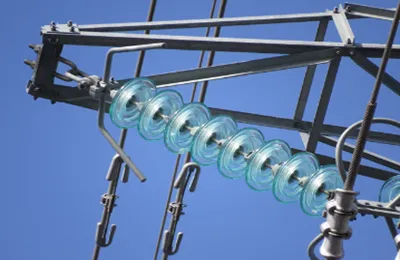
Suspension insulator fittings are critical components in high-voltage power transmission systems, designed to provide both electrical insulation and mechanical support for overhead conductors. These fittings connect individual insulator discs—made from materials like porcelain, glass, or polymer—into a flexible string or chain that can suspend conductors from transmission towers or poles.
What Are Suspension Insulator Fittings?
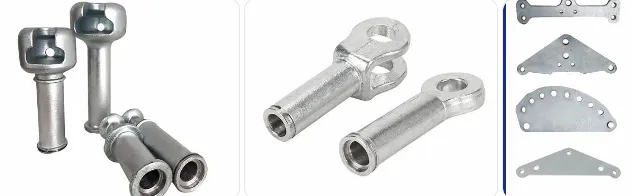
Suspension insulator fittings include various metal hardware such as clamps, brackets, pins, bolts, clevises (socket, ball, Y-clevis), links, and washers. These fittings securely hold the insulator discs in place and attach the insulator string to the supporting structure and the conductor. Their design ensures mechanical strength to withstand tension forces from the conductor’s weight and environmental stresses like wind or temperature changes, while maintaining electrical isolation.
Key Features and Specifications
Voltage Range: Suspension insulators typically operate in voltage ranges from 11 kV up to 765 kV, with the number of discs in the string adjusted to meet the required voltage insulation level.
Mechanical Strength: The fittings and insulator discs are engineered to endure significant mechanical loads, with tension proof loads and impact strengths varying by design and material.
Material Compatibility: Fittings are usually made from galvanized or forged steel to resist corrosion and provide durability, compatible with porcelain, glass, or polymer insulator discs.
Flexible Design: The suspension insulator assembly is flexible, allowing the string to swing under mechanical stress, which reduces the risk of damage and prolongs service life.
Installation and Functionality
Installation involves preparing the mounting structure, positioning the fittings correctly, and securely fastening them with bolts or clamps. The insulator discs are then strung together using the fittings, forming a chain that hangs vertically from the tower cross-arms. The conductor is attached at the bottom end of the insulator string via appropriate fittings, ensuring electrical isolation from the tower and mechanical support for the conductor.
These fittings perform several functions:
Connect insulator discs into strings
Attach insulators to towers
Connect conductors to insulator assemblies
Transfer mechanical loads
Maintain system alignment
Ensure safe operational performance
Without properly designed fittings, even high-quality insulators may not achieve the required performance levels.
Advantages of Suspension Insulator Fittings
High Voltage Capability: Their modular design allows easy addition of discs to accommodate higher voltages.
Ease of Maintenance: Individual discs can be replaced without dismantling the entire string, minimizing downtime.
Mechanical Flexibility: The swinging action under wind or load reduces mechanical stress on the insulator and fittings.
Reliable Electrical Insulation: The fittings maintain secure electrical isolation between the conductor and supporting structure.
These fittings are designed to ensure both mechanical stability and electrical performance in demanding transmission environments. In summary, suspension insulator fittings are indispensable for the safe and efficient operation of high-voltage overhead transmission lines. Their robust metal hardware connects insulator discs into flexible, high-strength strings that support conductors while providing vital electrical insulation. Proper selection, installation, and maintenance of these fittings maximize transmission reliability and longevity.