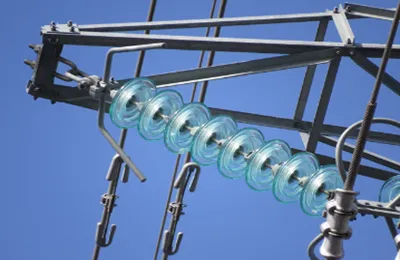
tempered glass insulators are widely used in power transmission and distribution systems to support and insulate electrical conductors. these insulators are made from tempered glass, which is a type of safety glass that has been heat-treated to enhance its strength and durability. below are the key points about tempered glass insulators:
definition and function of tempered glass insulators
tempered glass insulators: these insulators are used for insulating and hanging conductors in high-voltage and ultra-high-voltage ac and dc transmission lines. they are designed to provide electrical insulation and mechanical support to power transmission lines, preventing the flow of current through the tower or pole to the ground.
advantages of tempered glass insulators
no need for regular cleaning: tempered glass insulators do not require regular cleaning, which reduces maintenance efforts and costs. Damaged units are visually identifiable due to self-shattering characteristics, reducing inspection complexity and outage risks.
One of the most significant advantages of tempered glass insulators is their controlled “self-damage” behavior. When internal defects or external stress occur, the insulator breaks completely, allowing maintenance teams to quickly identify faulty units during aerial or ground inspections.
This feature is especially valuable for EPC projects managing thousands of kilometers of transmission lines, where rapid fault detection directly reduces maintenance downtime and labor costs.
Nooa Electric integrates strict quality control to minimize spontaneous failure rates while preserving this self-identification advantage.
high safety performance: they have a characteristic known as "zero-value self-breaking," which means that any damage to the insulator is easily detectable from the ground, reducing the need for close inspections and enhancing safety.
durability and longevity: tempered glass insulators retain their mechanical strength even if the insulating shell is damaged. they do not age like porcelain or non-ceramic materials, ensuring long-term reliability.
high mechanical strength: the surface of tempered glass insulators is highly resistant to mechanical stress and is less prone to cracking compared to porcelain insulators.
Tempered glass insulators provide stable dielectric strength and predictable behavior under extreme electrical stress, making them ideal for high-voltage transmission lines.
Tempered glass insulators are engineered with uniform internal structure, ensuring consistent dielectric properties across batches—an essential requirement for EPC contractors working on cross-border transmission projects. Unlike some composite materials that may degrade over time, glass maintains stable insulation performance under long-term electrical load.
For international tenders requiring IEC compliance and long operational guarantees, Nooa Electric tempered glass insulators deliver reliable flashover resistance and minimal leakage current risk, even in humid or polluted environments.
resistance to environmental factors: these insulators are highly resistant to corrosion, making them suitable for use in harsh environments such as coastal regions or areas with high levels of pollution.
Glass surfaces resist aging, UV degradation, and pollution accumulation, improving long-term reliability in harsh environments.
Tempered glass insulators are inherently resistant to ultraviolet radiation, acid rain, and industrial pollution. Their smooth surface helps reduce dirt adhesion, which is critical for coastal, desert, and industrial corridor transmission lines.
For international procurement teams, this translates into lower cleaning frequency and improved operational stability. Nooa Electric designs its insulators to perform reliably in high-salinity coastal zones and high-dust desert regions, supporting long-term grid resilience.
easy detection of damage: due to the transparency of glass, small cracks and internal defects are easier to detect during inspections, ensuring timely maintenance and preventing failures.
applications of tempered glass insulators
high-voltage transmission lines: tempered glass insulators are used in high-voltage power transmission lines to support and insulate electrical conductors from the towers or poles. they are designed to withstand mechanical stresses caused by wind, ice, and other environmental factors.
ground wire protection: these insulators are also used in ground wire protection devices in transmission lines to protect against lightning strikes and improve the safety of line operations.
types and models of tempered glass insulators
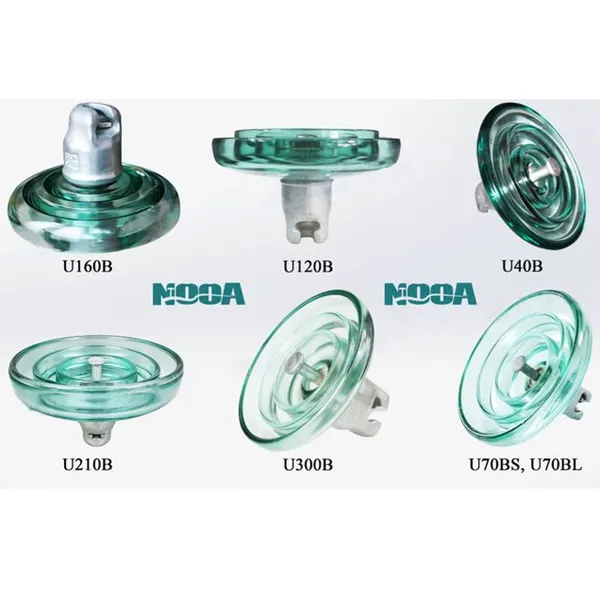
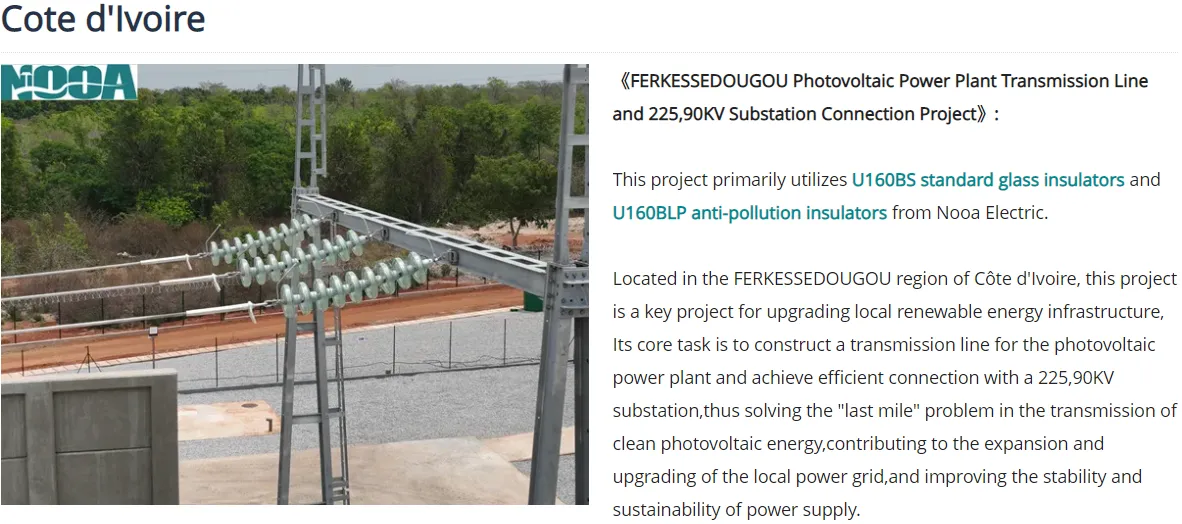
hot models: tempered glass insulators include u70bs, u70bl, u120b, u160bl, u160bs, u210b, and u300b. these models are used in various applications depending on the voltage and environmental conditions.
disc suspension insulators: these are the most widely used type of tempered glass insulators in power lines. they consist of a series of glass discs stacked on top of each other and held together by a metal rod or pin, creating an insulating barrier