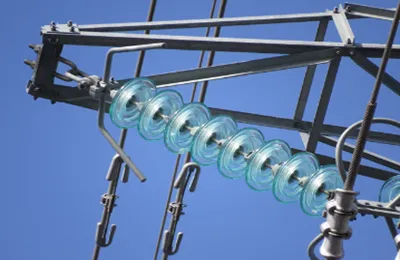
insulator strings include insulators and fittings components. as professional insulator strings supplier for transmission lines and substations, we supply fittings and accessories for all types of insulator string up to 500kv. fittings for insulator strings are essential components that connect and secure the insulators to the conductors and support structures in overhead transmission lines.
here are the key fittings used for insulator strings:
suspension clamps/fittings: these fittings are used to hang the insulator strings from the cross-arm or tower structure. they include components like suspension rings, suspension chains, suspension ring shoulders, and suspension ring pins. suspension clamps allow for some degree of movement and rotation of the insulator string.
tension/strain clamps/fittings: tension clamps are used to fix the insulator strings to the tower structure or substation equipment, providing a rigid connection. they can be detachable (adjustable conductor length) or non-detachable. common tension fittings include dead-end ball fittings, socket eyes, and strain clamps.
link fittings: these steel fittings, such as shackles and links, are used to attach clamps to insulators, creating a strong connection between components.
insulator string splice fittings: used to splice or join multiple insulator strings together to achieve the desired length. these include insulator string splice rings, splice chains, and splice shoulders.
insulator bending hoops/fittings: these fittings are used to connect insulators to support structures or suspension equipment, securing the insulator strings in their positions on the transmission line.
corona rings/fittings: corona rings or fittings are installed on insulators to minimize corona discharge and electrical stress on the insulator surface.
arcing horns/fittings: arcing horns or fittings are installed on insulators to provide a controlled path for electrical discharges during overvoltage conditions, protecting the insulators from damage.
the main differences between suspension clamps and tension clamps are as follows:
purpose:
suspension clamps are used to hang or suspend the conductors/cables from the support structures (poles, towers, etc.), allowing some degree of movement and rotation of the conductor/cable.
tension clamps, also known as strain clamps or dead-end clamps, are used to rigidly fix or anchor the conductors/cables to the support structures, providing a non-movable termination point.
functionality:
suspension clamps are designed to support the weight of the conductor/cable and allow for longitudinal and transverse movements to accommodate vibrations and thermal expansion/contraction.
tension clamps are designed to withstand the tensile forces in the conductor/cable and prevent any movement or slippage, providing a secure termination point.
installation:
suspension clamps are typically installed at intermediate points along the conductor/cable run, allowing for some sag or catenary in the line.
tension clamps are installed at the end points or termination points of the conductor/cable run, where the tensile forces need to be anchored.
design:
suspension clamps often have a more open design with a movable link or clevis to allow for conductor/cable movement and rotation.
tension clamps have a more rigid and compact design, with a conical body and wedges or gripping mechanisms to securely grip the conductor/cable.
materials:
suspension clamps are commonly made of engineering plastics or aluminum alloys for insulation and corrosion resistance.
tension clamps are often made of stainless steel, aluminum alloys, or other high-strength materials to withstand the tensile forces.