The Critical Role of Shape and Material in Preventing Flashover
Nooa Electric Glass Insulators: Guardians Against Electrical Breakdown
Electrical grids rely on robust insulation to prevent unintended current paths and ensure reliable power delivery. Among the various types of insulators, disc-shaped glass insulators are a ubiquitous sight on overhead transmission lines. Their seemingly simple design belies sophisticated engineering principles that effectively prevent electrical breakdowns, primarily through the mitigation of flashover and puncture.
Understanding Electrical Breakdown Mechanisms
Before delving into how disc-shaped glass insulators work, it's crucial to understand the primary mechanisms of electrical breakdown. In the context of insulators, these are:
Flashover: This occurs when an arc forms over the surface of the insulator, providing a conductive path for current to bypass the insulating material. This is often initiated by contamination (dust, salt, moisture) on the insulator's surface, which reduces its surface resistivity and creates leakage currents.
Puncture: This is a catastrophic failure where the insulating material itself breaks down internally, leading to a conductive path directly through the insulator. This is usually due to excessive voltage stress exceeding the dielectric strength of the material.
Design Features for Enhanced Dielectric Strength and Leakage Path Management
Disc-shaped glass insulators are engineered with specific features that directly address these breakdown mechanisms.
The Significance of the Disc Shape
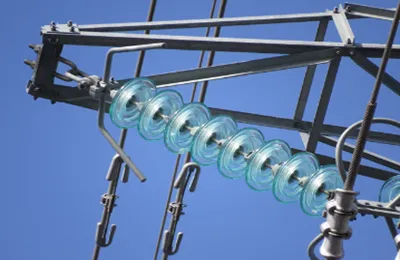
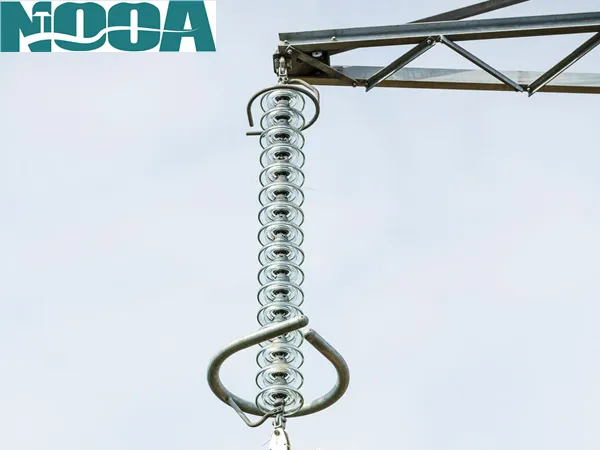
The most prominent feature, the disc shape, is far from arbitrary. Its design inherently elongates the leakage path along the insulator's surface. Imagine the path an electrical current would have to travel over the surface of a simple cylindrical insulator versus a disc-shaped one. The disc's undulating surface, often featuring sheds or skirts, forces the current to traverse a much longer distance, thereby increasing the surface resistance and making flashover less likely. This extended path also provides more surface area for contaminants to disperse, reducing the likelihood of a continuous conductive film forming.
Material Properties: The Unsung Hero
Beyond the shape, the choice of material—glass—is critical. Glass, particularly toughened glass, possesses excellent dielectric properties. Its high dielectric strength means it can withstand significant voltage stress without puncturing. Furthermore, glass is impervious to moisture, does not absorb water, and its smooth, non-porous surface is less prone to contamination buildup compared to some other insulating materials. Even when contaminated, glass is easier to clean, and its transparency allows for visual inspection of internal defects.
Mitigating Environmental Challenges
The effectiveness of disc-shaped glass insulators extends to their ability to perform reliably in diverse and often harsh environmental conditions.
Withstanding Contamination and Moisture
The sheds or skirts on the underside of disc insulators play a vital role in preventing the formation of continuous water films during rain or fog. These sheds create dry zones, breaking up the conductive path that moisture and contaminants might otherwise create. This design also encourages self-cleaning, as rain can wash away surface contaminants.
Thermal and Mechanical Resilience
Toughened glass insulators are designed to withstand significant thermal and mechanical stresses. They exhibit high resistance to thermal shock, meaning they can endure rapid temperature changes without cracking. Mechanically, they are strong enough to support the weight of conductors and withstand wind loads. In the event of a catastrophic failure, toughened glass shatters into small, blunt pieces, reducing the risk of injury from falling fragments, unlike porcelain which can break into large, sharp pieces.
Q&A about Disc-Shaped Glass Insulators:
Q: Why are disc-shaped insulators preferred over simpler shapes like cylinders for high-voltage applications?
A: Disc-shaped insulators significantly increase the leakage distance along the surface, making it much harder for an electrical arc (flashover) to form, especially in contaminated or wet conditions. Simpler shapes would offer a shorter, easier path for current to bypass the insulation.
Q: How does the "shed" or "skirt" design contribute to preventing electrical breakdowns?
A: The sheds or skirts create a longer, convoluted path for leakage currents and also provide "dry zones" during rain or fog. These dry zones break up continuous water films that could otherwise act as a conductive path for flashover.
Q: Is glass a better insulator material than porcelain for outdoor applications, and if so, why?
A: While both are effective insulators, glass has several advantages. It's non-porous, making it less susceptible to moisture absorption and contamination buildup. Its transparency allows for easy visual inspection of internal defects, and toughened glass shatters into safer, smaller pieces upon failure.
Q: What is the primary difference between "flashover" and "puncture" in terms of insulator failure?
A: Flashover is an external breakdown where an arc forms over the surface of the insulator, bypassing the insulating material. Puncture, on the other hand, is an internal breakdown where the insulating material itself fails, leading to a conductive path directly through the insulator.