Glass Insulator Strings: A Complete Guide for Transmission Line Reliability
Glass insulator strings are critical components used in high-voltage transmission and distribution networks to support conductors, provide mechanical strength, and ensure long-term electrical insulation. Their toughened glass construction offers exceptional dielectric stability, resistance to aging, and excellent visibility of defects.
What Are Glass Insulator Strings?
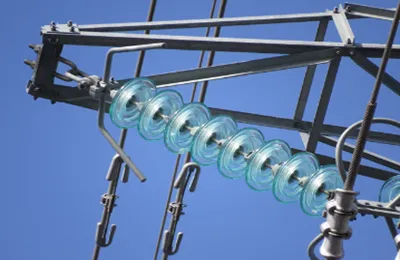
Glass insulator strings are assemblies of multiple toughened glass discs connected in series to provide electrical insulation and mechanical support for conductors on overhead transmission lines.
Glass insulator strings—also known as glass disc strings, toughened glass insulator chains, or glass suspension/tension strings—consist of standardized disc-shaped insulators connected by metal fittings. By adjusting the number of discs, utilities can design transmission lines for voltage levels ranging from 33kV to 800kV.
These strings serve two main purposes:
-
Electrical insulation: Preventing current leakage between the energized conductor and grounded transmission tower.
-
Mechanical support: Withstanding mechanical loads, wind forces, ice loads, and conductor tensions.
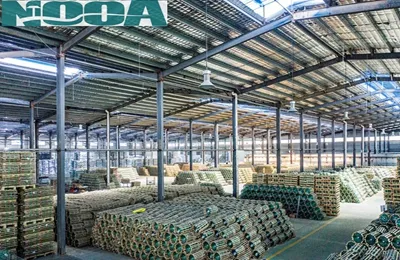
Glass Insulator Manufacturers like Nooa Electric., known for their high-precision glass insulator production lines, supply strings that meet IEC, ANSI, and customer-specific system design requirements.
Types of Glass Insulator Strings
Common types include suspension strings, tension strings, anti-fog glass strings, and double-circuit or V-string configurations.
1. Suspension Strings
Used when conductors hang vertically. Ideal for straight-line towers and regions with moderate mechanical load.
2. Tension Strings
Installed in line angles or dead-end sections where high mechanical strength is required. Long-rod or high-strength disc configurations (U120B, U160B, U210B, U300B, etc.) are typical.
3. Anti-Fog Glass Insulator Strings
Designed for coastal, high-pollution, or desert environments. These strings reduce contamination flashover and improve hydrophobicity.
4. V-String and Double-String Configurations
Used for extra-high-voltage (EHV) and ultra-high-voltage (UHV) transmission to increase stability and reduce swing during storms.
Key Advantages of Glass Insulator Strings
They offer high dielectric strength, zero aging, easy inspection, and superior reliability.
Zero Aging Properties
Toughened glass does not degrade under ultraviolet light or environmental exposure. Even after decades, dielectric performance remains stable.
High Mechanical Strength
Each disc is individually proof-tested. Broken pieces become easily visible due to self-shattering characteristics, preventing dangerous hidden defects.
Excellent Visibility
Transparency helps inspectors detect damage instantly—an advantage over porcelain and composite alternatives.
Consistent Electrical Performance
Low dielectric loss and uniform surface resistivity reduce the risk of flashover.
Long-Term Cost Efficiency
Lower maintenance frequency and predictable failure mode make these insulator strings cost-effective solutions for transmission operators.
Applications of Glass Insulator Strings
Used in transmission lines from 33kV to 800kV, in various climates and mechanical loading conditions.
Glass insulator strings are used in:
-
High voltage (HV) and extra-high voltage (EHV) overhead transmission lines
-
Substation busbar support systems
-
Distribution networks in coastal or polluted environments
-
Heavy ice, high-wind, or desert regions
Utilities prefer toughened glass insulator strings for their predictable mechanical behavior and transparent failure indications.
How Manufacturers Like Nooa Electric Ensure Insulator Reliability
Strict material control, IEC-compliant production, and 100% proof-testing ensure top-level performance.
Nooa Electric ensures premium quality by:
-
Using high-purity borosilicate toughened glass
-
100% mechanical & electrical routine tests on every insulator disc
-
Precision metal-fitting crimping for long-term mechanical stability
-
Compliance with IEC 60383, IEC 60120, IEC 61284, ANSI C29 standards
-
Customizing string configurations for different voltage classes and climatic conditions
International customers value Nooa Electric’s engineering expertise, transparent factory quality control, and ability to supply tailored insulator string assemblies (U70B, U120B, U160B, U210B, fog type, open-profile type, etc.).
FAQ: Glass Insulator Strings
1. How many discs are used in a glass insulator string?
The number depends on the voltage level.
-
33–66kV: 3–5 discs
-
110kV: 6–9 discs
-
220kV: 12–15 discs
-
400kV: 18–23 discs
-
500–800kV: 25+ discs
2. Are glass insulator strings better than composite polymer insulators?
It depends on application. Glass offers longer service life, better visibility, and zero aging, while polymer insulators are lighter and suitable for compact tower designs.
3. How do I know if a glass insulator disc is damaged?
Toughened glass shatters into small pieces internally, making defects clearly visible from the ground. The insulator continues functioning but should be replaced during maintenance.
4. Can glass insulators be used in polluted or coastal areas?
Yes, anti-fog and anti-pollution profiles (large creepage distance) are specifically designed for such environments.
5. What is the typical mechanical strength of a glass insulator disc?
Common ratings include: