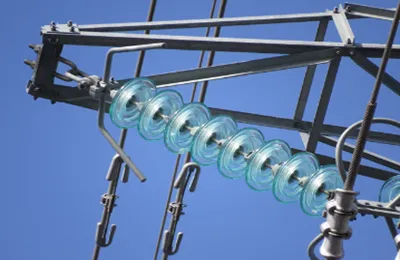
glass insulators are used to insulate and support electrical conductors, such as wires and cables, in various applications. the primary purpose of insulators is to prevent the flow of electric current from the conductor to the surrounding structure or the ground. glass insulators are typically used in overhead power lines and electrical distribution systems.
here are 6 key functions and reasons for using glass insulators:
1.electrical insulation: Glass insulators prevent electricity from leaking from conductors to transmission towers. the main function of insulators is to prevent the flow of electricity along the supporting structure. this ensures that the electrical current remains within the conductor and does not leak to the ground or other nearby structures.
The most important function of a glass insulator is electrical insulation.
Glass has very high dielectric strength, allowing it to:
Prevent current leakage
Maintain safe phase separation
Reduce the risk of short circuits
Protect transmission towers from energization
Without effective insulation, high-voltage transmission systems would experience:
Flashovers
Energy loss
Equipment damage
Power outages
This makes high voltage glass disc insulators critical for modern power grids.
2.mechanical support: glass insulators provide support to the electrical conductors, helping to maintain the appropriate distance and separation between the conductors and supporting structures. this is crucial for the safe and reliable operation of power lines.
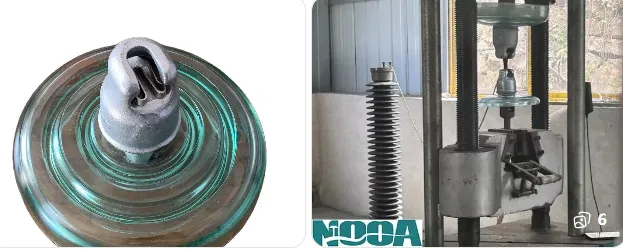
Glass insulators must withstand:
Conductor tension
Wind load
Ice accumulation
Vibration and conductor movement
In suspension insulator strings, the glass discs carry heavy mechanical loads while maintaining electrical isolation.
Manufacturers like Nooa Electric produce high mechanical strength glass insulators specifically designed for demanding transmission conditions.
3.weather resistance: Glass insulators perform reliably under harsh weather and pollution conditions. glass insulators are designed to withstand various environmental conditions, including rain, snow, and extreme temperatures. they are resistant to weathering and provide a reliable barrier against moisture, which could otherwise compromise the insulation properties.
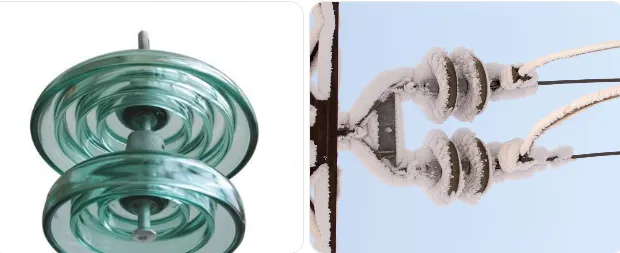
Glass insulators are designed to resist:
UV radiation
Rain and humidity
Salt fog
Industrial pollution
Temperature fluctuations
Modern anti-pollution designs improve:
Creepage distance
Flashover resistance
Surface performance in contaminated environments
These features make glass disc insulators for transmission lines suitable for:
Coastal areas
Desert regions
Industrial zones
Mountain environments
4.corrosion resistance: glass insulators are not susceptible to corrosion, making them durable and suitable for long-term use in outdoor environments. this is especially important for power lines and electrical systems that are exposed to the elements.
5.high voltage applications: glass insulators are often used in high voltage applications, where maintaining proper insulation is critical for safety and the efficient transmission of electricity.
6.Flexibility for High-Voltage Transmission Systems
Glass insulators can be assembled into strings for different voltage levels.
Glass disc insulators are modular:
Additional discs can be added for higher voltages
Insulator strings can be customized for environmental conditions
Applications include:
66kV transmission systems
220kV networks
500kV extra-high-voltage lines
Ultra-high-voltage (UHV) projects
This scalability makes suspension glass insulators ideal for modern long-distance power transmission.