1.What is the low voltage suspension insulators?
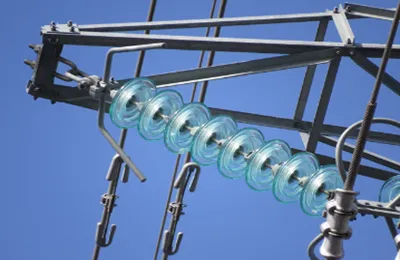
low voltage suspension insulators are crucial components used in electrical systems to support and insulate conductors at lower voltages. these insulators are designed to withstand the electrical stresses and mechanical loads associated with low voltage transmission lines, typically up to 33 kv. each disc in a suspension insulator string is designed for a specific low voltage, such as 11 kv, and the number of discs in the string depends on the working voltage. Although suspension insulators are more commonly associated with medium- and high-voltage transmission lines, they are also used in certain low-voltage and compact distribution applications where higher mechanical strength, improved reliability, and flexible conductor arrangement are required.
2.What is the key points about low voltage suspension insulators?
-
design: suspension insulators are flexible and allow for easy replacement of damaged discs without replacing the entire string.
-
function: they are used to protect overhead power lines by providing insulation and support to the conductors.
-
materials: suspension insulators can be made of porcelain, glass, polymer, ceramic, or crystals like quartz.
-
advantages:easy maintenance and replacement of damaged discs.
-
applications: used in both high-voltage and low-voltage transmission lines, electric poles, generators, transformers, railway lines, and electric motors.
3.Advantages Of Suspension Insulators For Low Voltage Applications
Better Mechanical Flexibility
Suspension systems allow conductors to swing slightly under wind loads, reducing stress concentration.
Improved Line Reliability
The hanging configuration minimizes the risk of insulator breakage caused by conductor tension.
Easier Voltage Expansion
Additional insulator units can be added if future voltage upgrades are planned.
Better Performance In Harsh Environments
Suspension insulators perform well in:
Coastal regions
High-pollution industrial zones
High humidity areas
Strong wind environments
low voltage suspension insulators play a critical role in ensuring the safe and efficient operation of electrical systems by providing insulation and support to conductors at lower voltages, typically up to 33 kv.
FAQ About Suspension Insulators For Low Voltage
What is a suspension insulator used for in low-voltage systems?
It supports overhead conductors while electrically isolating them from poles or supporting structures.
Are suspension insulators only used for high-voltage lines?
No. Although commonly used in high-voltage systems, suspension insulators are also applied in certain low-voltage distribution networks requiring higher mechanical strength.
Why are glass suspension insulators preferred?
Glass suspension insulators offer excellent visibility, strong mechanical performance, long service life, and stable electrical insulation.
What materials are used for low-voltage suspension insulators?
Common materials include toughened glass, porcelain, and composite polymer materials.
Can suspension insulators improve distribution line reliability?
Yes. Their flexible hanging structure helps reduce conductor stress and improves overall network durability.
Are suspension insulators suitable for coastal environments?
Yes. Properly designed anti-pollution suspension insulators perform well in coastal and industrial environments.
How do EPC contractors choose the right suspension insulator?
Selection depends on voltage level, conductor load, environmental conditions, project specifications, and international standards compliance.