What Is the New Power System?
1. What Is the Concept and Meaning of the New Power System?
The new power system is an advanced power infrastructure designed with energy security as a fundamental prerequisite, meeting the demands of high-quality economic and social development as its primary goal. It focuses on integrating a high proportion of renewable energy into the power supply and consumption system, supported by multi-directional coordination and flexible interaction between power generation, grids, loads, and energy storage. It relies on a robust, intelligent, and flexible grid as a pivotal platform, with technological innovation and institutional reforms as foundational safeguards.
In simple terms, the new power system builds upon the traditional system but places greater emphasis on the development and utilization of renewable energy. It enhances coordination between power generation, grids, loads, and storage, leveraging intelligent and digital technologies to achieve efficient, secure, and clean power operation.
2. Characteristics and Structure of the Traditional Power System
Before the emergence of the new power system, China's traditional power system was primarily based on fossil fuel generation, including coal, oil, and natural gas. Its main characteristics included:
Dominance of Centralized Power Sources: The system relied on large-scale centralized power sources such as coal-fired power plants, nuclear power, and hydropower. Electricity was transmitted over long distances via high-voltage transmission networks to load centers. Thermal power held a dominant position, with installed capacity exceeding 50% for a long time and accounting for 60%-70% of total electricity generation.
Top-Down Power Transmission and Distribution: The grid structure resembled a pyramid, with ultra-high voltage transmission networks distributing electricity downward to regional distribution networks before reaching end users.
Weak Load-Side Response: The traditional grid primarily balanced load fluctuations by adjusting power generation on the supply side, with limited flexibility on the user side.
Rigid Dispatching Model: Power dispatch was mainly planned in advance, lacking the flexibility to accommodate the variability of renewable energy generation.
3. Challenges Faced by the Traditional Power Grid
With the large-scale development of clean energy sources such as wind and solar power, several challenges have emerged in the traditional power system:
High Variability of Renewable Energy and Insufficient Regulation Capacity: Wind and solar power generation are highly weather-dependent, with intermittent and unpredictable output, making it difficult for traditional power systems to respond quickly.
Lack of Grid Dispatch Flexibility: The current power grid mainly relies on traditional power sources such as coal and hydropower for frequency and peak regulation, but these sources lack the responsiveness and flexibility required to accommodate renewable energy fluctuations.
Transmission Capacity Bottlenecks: Renewable energy resources are mainly concentrated in northwestern China, while load centers are in the east, creating challenges for long-distance power transmission and grid stability.
Lack of Interaction on the User Side: Traditional grids operate in a unidirectional flow from generation to transmission, distribution, and consumption, with limited mechanisms for demand-side flexibility and response.
4. Features of the New Power System
To address these issues, China is accelerating the construction of a new power system with the following key features:
1.Renewable Energy as the Primary Source: Large-scale wind and solar power will replace fossil fuels as the dominant energy sources.
2.Development of Smart Grids: Advanced power electronics, sensing technologies, and artificial intelligence will optimize grid dispatch and balance supply and demand.
3.Multi-Energy Complementarity for Greater Flexibility: The integration of energy storage, electric vehicles, pumped-storage hydropower, and hydrogen energy will enhance grid flexibility and regulation capacity.
4.Decentralized Energy Systems: Encouraging the development of distributed energy systems, including user-side photovoltaic (PV) installations, energy storage, and microgrids, to support local energy self-consumption and reduce dependence on large-scale power grids.
5.Enhanced Demand-Side Management: Implementing smart home technologies, time-of-use electricity pricing, and virtual power plants to encourage users to actively adjust their electricity consumption in coordination with the grid.
6.Establishment of a Unified National Electricity Market: Promoting electricity market reforms to optimize resource allocation and enhance the integration of renewable energy.
The transition to a new power system is an inevitable trend in the energy sector. Between 2024 and 2027, constructing this new system will be a crucial strategy for overcoming bottlenecks in renewable energy development and building a green, low-carbon energy infrastructure. Achieving this transition requires not only technological breakthroughs in power electronics, energy storage, and intelligent dispatch but also improvements in market mechanisms and policy frameworks. By advancing smart grids, enhancing energy storage capabilities, and deepening market reforms, China aims to accelerate the deployment of the new power system and facilitate the transformation of its energy structure in line with its dual-carbon (carbon peak and carbon neutrality) goals.
What Is the Connection Between Glass Power Insulators and the New Power System?
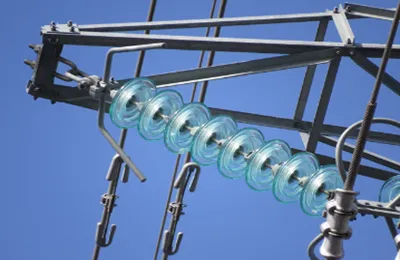
Glass power insulators play a crucial role in the new power system, and their application value has become increasingly significant with the development of a smarter and cleaner power grid. The specific connections between glass power insulators and the new power system are as follows:
1. Adapting to High Proportion of Renewable Energy and Enhancing Grid Security
The new power system primarily relies on wind and solar energy, with many renewable energy power stations located in harsh environments such as high-altitude, windy, and sandy regions (e.g., Northwest wind power bases and Southwest hydropower bases). Due to their excellent weather resistance and pollution flashover performance, glass power insulators provide long-term stable insulation support in extreme environments, ensuring the safe operation of transmission lines.
2. Supporting Ultra-High Voltage (UHV) Transmission and Enhancing Long-Distance Power Delivery
Since renewable energy generation sites and load centers are often far apart (such as West-to-East power transmission and North-to-South power transmission), UHV transmission technology has become a crucial part of the new power system. Glass power insulators, with their high mechanical strength and superior electrical insulation properties, are ideal for UHV transmission lines. They effectively prevent flashovers and enhance the safety and stability of long-distance power transmission.
3. Meeting Smart Grid Requirements and Improving Operation and Maintenance Efficiency
The new power system emphasizes smart grid development, which requires power grid components to be visualized, digitalized, and intelligent. Glass power insulators feature self-breakage visibility (automatically dropping when damaged, making detection and replacement easier), significantly reducing maintenance costs compared to traditional porcelain insulators. This aligns with the smart operation and maintenance goals of the new power system.
4. Enhancing Grid Flexibility to Accommodate Complex Load Demands
With the growing integration of distributed photovoltaic (PV) systems, energy storage, and microgrids, the power grid’s load characteristics are becoming more complex, requiring insulation equipment with higher voltage resistance and reliability. The high voltage endurance and electrical corrosion resistance of glass insulators enable them to operate stably in complex grid environments, reducing the risk of power failures.
5. Promoting Green and Low-Carbon Development in Line with the “Dual Carbon” Goals
Glass insulators are made from environmentally friendly materials, with low pollution during production, long service life, and recyclability after decommissioning. These characteristics align with the new power system’s goal of green and low-carbon development. Compared to traditional porcelain insulators, glass insulators offer advantages in terms of energy efficiency and environmental protection, making them a key component of low-carbon transmission systems.
Glass power insulators are indispensable in the new power system, as they enhance the safety and stability of transmission lines, support UHV transmission, facilitate smart grid development, and contribute to green and low-carbon energy transition. As the construction of the new power system accelerates, the market demand for glass insulators and their technological advancements will continue to expand, playing a vital role in optimizing China’s energy structure.