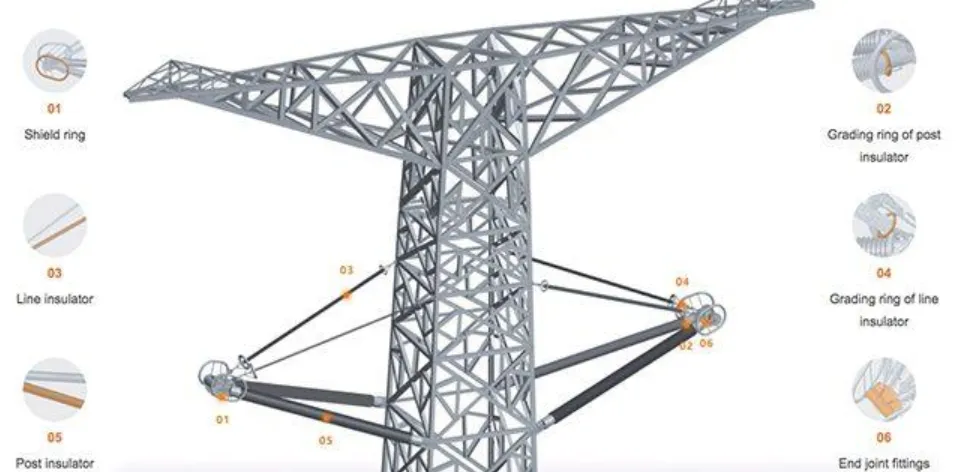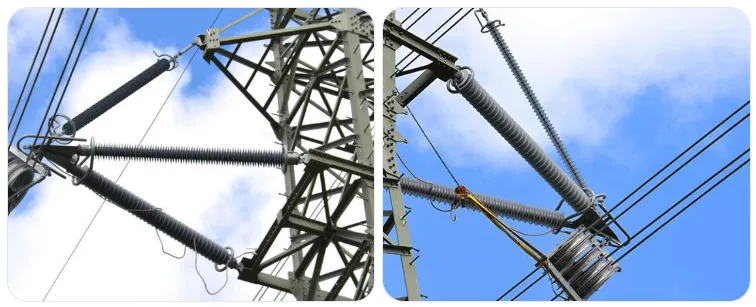
A composite post cross arm insulator is an electrical insulating device used in power distribution and transmission systems. It is designed to provide electrical insulation and support for overhead power lines and conductors. The term "post cross arm insulator" refers to its typical application in a configuration where it is mounted on a cross arm, which is a horizontal structure attached to utility poles or towers. Here are some key features and functions of a composite post cross arm insulator:

Material Composition:Unlike traditional porcelain insulators, composite post cross arm insulators are made from composite materials, often a combination of polymer (such as silicone rubber or EPDM) and fiberglass. This composite material offers several advantages, including resistance to weathering and improved mechanical strength.
Electrical Insulation:The primary purpose of these insulators is to electrically insulate the power line conductors from the supporting structures (poles or towers) and the ground. This prevents electrical leakage and ensures the efficient transmission of electrical power.
Mechanical Strength:Composite materials provide excellent mechanical strength, making these insulators suitable for withstanding various environmental stresses, such as wind, ice, and vibration. They are also lightweight, which can simplify installation and maintenance.
Corrosion Resistance:Composite insulators are resistant to corrosion, which is essential for long-term performance in outdoor environments.
Easy Maintenance:Composite post cross arm insulators are known for their low maintenance requirements. They do not require the regular cleaning that porcelain insulators do, and they are less prone to damage.
Hydrophobic Properties:Many composite insulators have hydrophobic (water-repellent) properties. This prevents the accumulation of moisture and contaminants on the insulator surface, reducing the risk of flashovers and tracking.
Anti-Pollution Design:Some composite insulators are designed with special sheds or skirts to minimize the effects of pollution and contamination on the insulator's surface. These sheds shed water droplets and contaminants, preventing them from forming a conductive path.
Long Service Life:Composite post cross arm insulators typically have a long service life, making them cost-effective over the long term.
Versatile Applications:These insulators are used in a wide range of voltage classes, from distribution lines to high-voltage transmission lines.
Composite post cross arm insulators have become increasingly popular in the electrical power industry due to their improved performance, durability, and reliability compared to traditional porcelain insulators. They are commonly used in power systems to ensure safe and efficient electricity transmission and distribution.composite hollow core insulators for sale, composite type insulator price, hollow insulator supplier
They provide insulation and structural support simultaneously in overhead transmission systems
Traditional systems use:
Steel cross arms
Suspension or pin insulators
Composite cross arm systems combine these functions into one insulated structural component.

The composite arm:
Bears conductor mechanical loads
Maintains insulation distance
Reduces electric field concentration
Improves line compactness
This design is especially useful for:
Compact transmission corridors
Urban transmission projects
Mountainous terrain installations
They reduce weight, improve pollution resistance, and support compact line design.
Lightweight Construction
Much lighter than steel cross arms and porcelain insulators.
Excellent Pollution Resistance
Silicone rubber surfaces maintain hydrophobicity in contaminated environments.
Reduced Tower Size
Allows narrower transmission corridors and more compact tower designs.
Corrosion Resistance
Suitable for coastal and industrial environments.
Improved Safety
Reduced risk of conductive corrosion and electrical flashover.
A: It combines conductor support and electrical insulation into one integrated structure.
A: They use fiberglass and silicone rubber instead of heavy steel and porcelain components.
A: Yes. Silicone rubber provides excellent hydrophobic and anti-pollution performance.
A: They are widely used in compact transmission lines, urban grids, and coastal areas.
A: Composite systems reduce weight and improve compactness, while glass disc insulators offer excellent long-term durability and easier visual fault detection.