News Center

To Konw More Our Company News and Exhibition Topics Here.
high-voltage insulator,porcelain insulators,glass insulators used for

Glass Insulators VS Porcelain Insulators

Date:2024-05-22Tags:high-voltage insulator,porcelain insulators,glass insulators used for
below are the key differences between glass insulators and porcelain insulators:
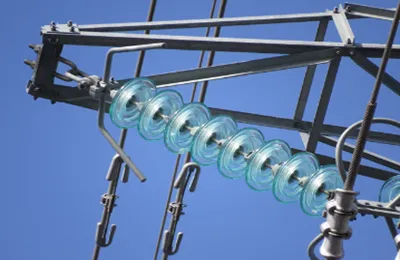
glass insulators
porcelain insulators
glass insulators are made of toughened glass which helpsto prevent the cracks formation in the insulators.
porcelain insulators are made of ceramic materialsi.e.china clay,quarts,aluminum silicate,plastickaolin, feldspar).
little bit weaker than porcelain.
mechanically strong.
high dielectric strength (140kv/cm).
less dielectric strength (60kv/cm).
low compressive strength (10,000kg/cm’).
high compressive strength (70,000kg/cm').
high tensile strength (35,000kg/cm').
low tensile strength (500kg/cm').
less effect of temperature and not heated up in the sunlight.
lesser effect of temperature but offers self-healingsupport.
there is a risk of leakage current due to moisture andraindrops condensed and stagnating on the glass surface.
moisture and raindrops do not settle on the surfacehence, there is no chance of leakage current insidethe porcelain.
faults can be easily spotted externally because of thetransparent designcompared to the porcelain.e.g.obvious failure can be spotted with glass shattering.
faults can't be easily found externally as they are notclear and transparent like glass insulators.
as the outer surface is smooth and transparent, there is alittle chance of formation of dusty layers.
the dust layers formed over time as the outer surfaceis not smooth and transparent as compared to glass.
because of the transparency,the air-bubble and otherimpurities can be easily detected.
impurities can't be seen easily due to the nontransparent design and material.
they offer excellent pollution withstand performance ascompared to porcelain.
the pollution withstands performance is not thatimpressive.
the mechanical andelectricalproperties andcharacteristics remain the same over a long time ofservice.
electrical and echanicscharacteristicsandproperties change by ageing.
high specific resistance and low coefficient of thermalexpansion.
low specific resistance.

glass insulators
porcelain insulators
short lifespan than porcelain but has a good servicehistory.
long service and lifespan with good service history.
they are homogeneous(same material used externallyand internally).
they are not homogeneous(the outer and innermaterial is different).
looks beautiful.
don't have a good impact on beautification.
they are light in weight.
they are heavy.
complex transportation with extra care.
easy transportation.
easy installation (same procedure).
easy installation.
used for high voltage ratings.
due to the high dielectric strength,they are easy todesign.
they are relatively complex to design.
they can't be designed in asymmetrical and irregularshapes.
they are possible to design in an irregular shape.
lesser costly than porcelain.
less costly.
mostly used in the uk,sweden, russia, canada & us etc.

popular and used often in asia and africa.

excellent pollution withstand performance
less effective in polluted environments
shorter lifespan than porcelain insulators
longer service lifespan than glass insulators

glass insulators provide key advantages in dielectric strength, tensile strength, pollution performance and ease of fault detection, making them preferable for certain high-voltage applications.

We use cookies and other tracking technologies to improve your browsing experience on our website, to show you personalized content and targeted ads, to analyze our website traffic, and to understand where our visitors are coming from.