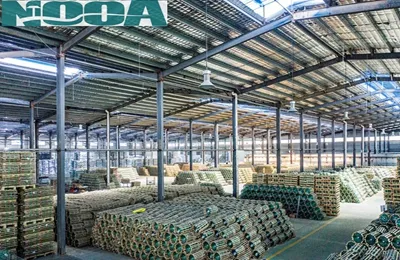
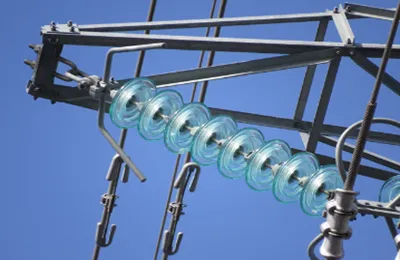
power line insulators are crucial components used in overhead electrical transmission and distribution systems. they serve the primary purpose of insulating and supporting the conductors (wires or cables) from the ground or supporting structures, preventing the flow of electrical current and ensuring safe and reliable power transmission. below are the key points about our nooa electric power line insulators:
1.types of power line insulators:
Glass Insulator: Toughened glass insulators provide excellent transparency, self-detecting failure characteristics, and long service life.Glass insulators remain highly popular in high-voltage transmission systems due to their stable electrical performance and visible damage detection capability.
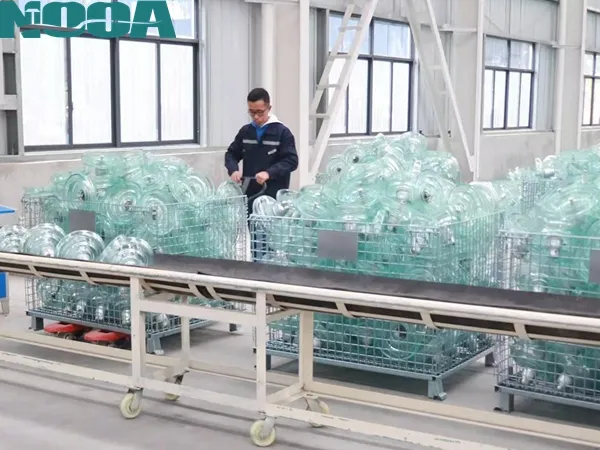
Advantages include:
1.High dielectric strength
2.Easy visual inspection
3.Strong aging resistance
4.Long operational lifespan
When damaged, glass insulators typically shatter visibly, allowing maintenance teams to quickly identify defective units.
Nooa Electric supplies toughened glass insulators for international transmission projects requiring reliable long-term grid operation.
pin insulators: these are the most basic type, consisting of a single piece of porcelain or glass mounted on a pin attached to the cross-arm of the supporting structure. they are commonly used for low-voltage distribution lines up to 33kv.
Pin type insulators are one of the oldest and most widely recognized power line insulators. They are mounted directly onto steel or wooden poles using pins and support conductors above the crossarm.
These insulators are commonly applied in:
1.Distribution networks
2.Rural electrification systems
3.Medium-voltage overhead lines
4.Utility pole installations
For lower and medium voltage applications, Nooa Electric pin insulators provide cost-effective insulation performance with durable weather resistance.
suspension insulators: these consist of a series of porcelain or glass discs connected by metal links, forming a string. they are designed for higher voltage transmission lines (66kv and above) and provide better mechanical strength and flexibility. Suspension insulators are widely used in high-voltage transmission lines because they provide flexible mechanical strength and scalable voltage insulation.
Suspension insulators are among the most commonly used insulators in modern transmission systems. They typically consist of multiple insulator discs connected in series to form an insulator string.
These insulators are ideal for:
1.High-voltage overhead transmission lines
2.Long-span tower structures
3.Heavy conductor loading applications
4.Extra-high-voltage (EHV) and ultra-high-voltage (UHV) systems
Suspension insulators can be manufactured using porcelain, toughened glass, or composite polymer materials. Nooa Electric supplies suspension insulators designed for demanding international utility and EPC transmission projects.
strain insulators: used to manage mechanical stresses at sharp bends, angles, and dead-ends in transmission lines. they are typically made of porcelain or glass units arranged in a string configuration.
shackle insulators: also known as spool or guy strain insulators, these are used for low-voltage distribution lines and are mounted horizontally
post insulators: introduced in the 1930s, these are more compact than pin insulators and are used for voltages up to 69kv.
2.materials used for power line insulators:
the most common materials used for power line insulators are porcelain, glass, and polymer composites (silicone rubber). these materials are chosen for their high electrical resistance, mechanical strength, and ability to withstand environmental conditions.
3.how to select power line insulators:
when selecting power line insulators, factors such as voltage level, mechanical strength, insulation properties, environmental factors (pollution, uv radiation, temperature), and cost and maintenance requirements are considered.
insulator failure can occur due to flashover (electrical discharge through air) or puncture (discharge through the insulator body), which can be mitigated by proper design, material selection, and maintenance.
anyway, power line insulators play a vital role in ensuring the safe and reliable transmission of electrical power by insulating and supporting conductors while withstanding various electrical, mechanical, and environmental stresses. if you wanna know more glass insulators pls contact us now!