Clevis Type Suspension Insulator Caps
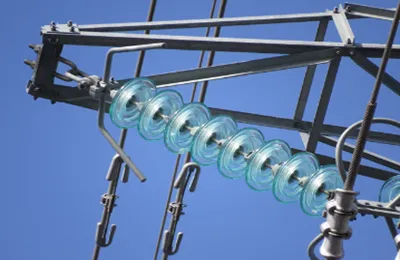
Suspension insulator caps are critical components in overhead power transmission systems, ensuring reliable mechanical and electrical connections between conductors and towers. The three main types of suspension insulator caps—Clevis, Socket, and Tongue—each have unique designs and applications, tailored to specific mechanical and electrical demands.
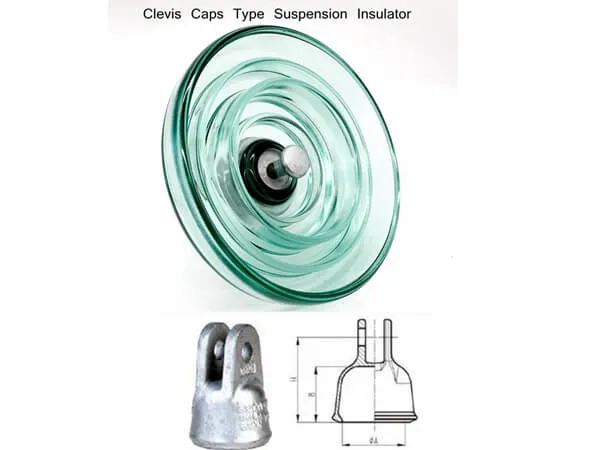
1. Clevis Type Suspension Insulator Caps
Design & Features:
The clevis type has a U-shaped configuration, resembling a fork, with two parallel arms and a pinhole for securing the insulator.
It works in conjunction with a clevis pin and a cotter pin to ensure a strong mechanical connection.
Often made of hot-dip galvanized steel or aluminum alloy, these caps provide excellent resistance to corrosion and mechanical stress.
Applications:
Used in medium to high-voltage lines where ease of assembly and disassembly is important.
Ideal for situations requiring alignment adjustments, as the clevis design allows for minor positional flexibility.
11kV distribution lines
33kV overhead networks
66kV transmission systems
Strain insulator assemblies
Dead-end structures
Advantages:
Strong and durable under heavy mechanical loads.
Easy to assemble and maintain.
Strong Compatibility
Clevis fittings are compatible with:
Tongue fittings
Y-clevis fittings
Ball eyes
Extension links
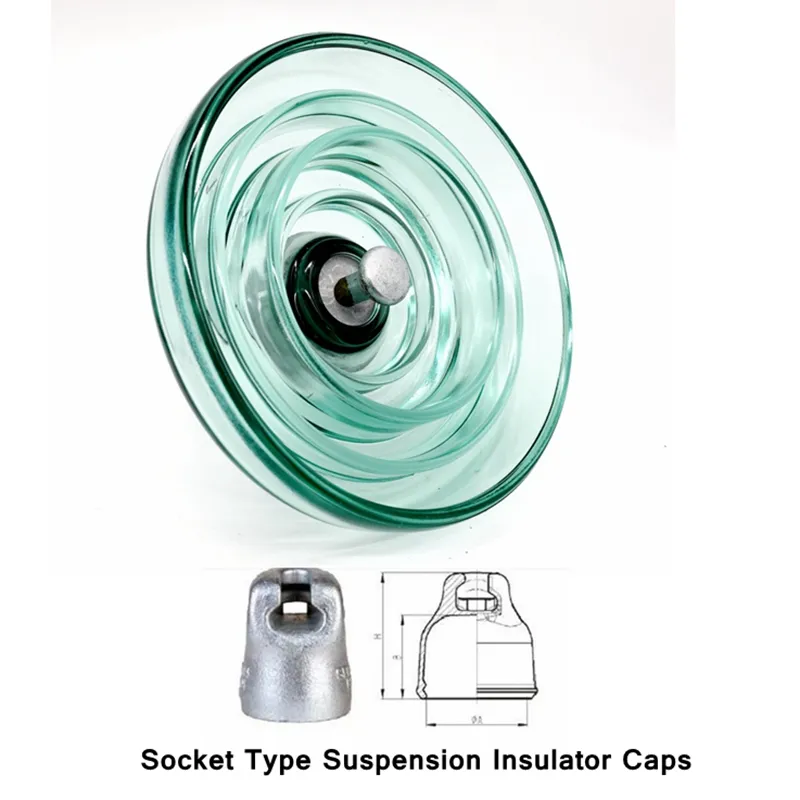
Socket Type Suspension Insulator Caps
Design & Features:
The socket type cap is a closed, cup-shaped component that encloses the ball head of the mating fitting.
The connection is secured using a locking pin or cotter pin, ensuring the ball and socket joint remain intact during operation.
Made from high-strength steel, often coated for corrosion resistance, these caps are engineered for high-stress environments.
Applications:
Common in high-voltage transmission lines and substations.
Suitable for use in suspension strings where vibration damping is critical.
Advantages:
Provides a secure, stable connection, even under dynamic loading conditions.
Excellent for high-tension installations requiring strong mechanical integrity.
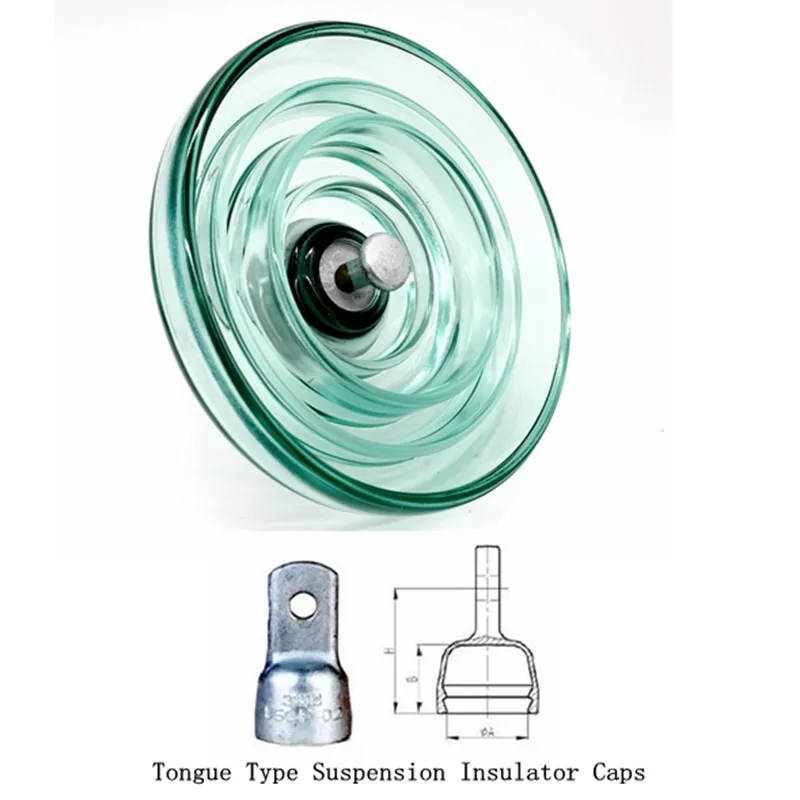
Tongue Type Suspension Insulator Caps
Design & Features:
The tongue type cap has a flat extended plate with a hole that connects to the devis of another fitting or directy to a conductor dampTypically forged from durable metal materials, ensuring robustness and reliability in various conditions.Its straightforward design makes it lightweight yet highly functional for specific configurations.
Applications:
Used in configurations requiring direct attachments or where space constraints make other caps impracticalCommon in low to medium-voltage installations and certain specialty high-voltage setups.
Advantages:
Simple design allows for quick and efficient installation.
Lightweight, making it suitable for situations with weight restrictions.
Each type of suspension insulator cap is designed to meet specfic needs in power transmission systems. The devs ype excels in flexblity andstrength, the socket type in stabilty and durability, and the tongue type in simplicity and efficiency. Selecting the appropriate cap type ensuressystem reliability, safety, and optimal performance in different operational contexts.
FAQ: 3 Types of Suspension Insulator Caps
1. What is a suspension insulator cap?
A suspension insulator cap is the metal fitting attached to an insulator unit that enables mechanical connection and load transfer within an insulator string.
2. What is the difference between a clevis and a socket fitting?
A clevis fitting uses a fork-and-pin connection, while a socket fitting uses a ball-and-socket connection.
3. Why are socket fittings widely used in transmission lines?
Socket fittings provide fast installation, excellent articulation, high mechanical strength, and global standardization.
4. What is a tongue fitting?
A tongue fitting is a flat blade-shaped connector designed to fit inside a clevis fitting and secured with a locking pin.
5. Which fitting type is most common for glass suspension insulators?
Ball-and-socket fittings are the most common configuration for toughened glass suspension insulators.
6. What materials are used to manufacture suspension insulator caps?
They are typically made from hot-dip galvanized malleable iron, ductile iron, forged steel, or cast steel.
7. Are suspension insulator caps standardized?
Yes. Most fittings comply with IEC 60120, ANSI C29, and other international standards.
8. How is corrosion prevented on suspension insulator caps?
Hot-dip galvanizing provides a protective zinc coating that resists corrosion in harsh environments.
9. Can clevis and tongue fittings be used together?
Yes. Clevis-and-tongue assemblies are one of the most common connection systems used in distribution and transmission lines.
10. What should EPC contractors consider when selecting suspension insulator caps?
Contractors should evaluate mechanical load rating, voltage class, environmental conditions, applicable standards, corrosion resistance, and compatibility with existing transmission hardware.
Comparison of Clevis, Socket, and Tongue Type Caps
Feature
|
Clevis Type
|
Socket Type
|
Tongue Type
|
Connection Method
|
Fork and pin
|
Ball and socket
|
Blade and pin
|
Installation Speed
|
Fast
|
Very fast
|
Fast
|
Mechanical Strength
|
High
|
Very high
|
High
|
Articulation Capability
|
Moderate
|
Excellent
|
Moderate
|
Typical Voltage
|
Distribution to HV
|
HV to UHV
|
Distribution to HV
|
Maintenance Convenience
|
Good
|
Excellent
|
Good
|
Standardization
|
High
|
Very high
|
High
|